The Ultimate Service Call | Bootcamp Debrief with Clay & Joseph REPLAY
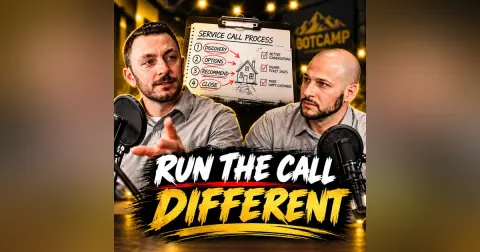
Want the exact Demand Call Process for running better electrical service calls? Start with the resources inside the SLE Pro App and steal the approach: https://serviceloopelectrical.com/pro-app ———————————— Most electricians start solving the problem before they’ve even parked… Read the work order. Diagnose it in the truck. Walk in pointing out everything wrong. Throw out a price. Repeat until your calendar looks like Tetris and lunch is a dashboard sandwich. Meanwhile… We’ve run these calls ...


Want the exact Demand Call Process for running better electrical service calls?
Start with the resources inside the SLE Pro App and steal the approach:
https://serviceloopelectrical.com/pro-app
————————————
Most electricians start solving the problem before they’ve even parked…
Read the work order.
Diagnose it in the truck.
Walk in pointing out everything wrong.
Throw out a price.
Repeat until your calendar looks like Tetris and lunch is a dashboard sandwich.
Meanwhile…
We’ve run these calls ourselves.
Joseph just spent four hours teaching this process in bootcamp.
And we’ve helped hundreds of electricians put these principles to work.
Like Scooby-Doo.
Same framework.
Different mystery behind the cover plate.
Because great service calls don’t feel like a sales ambush…
They feel like someone finally listened.
But behind the scenes?
They’re built on a repeatable process.
What you ask.
What you explain.
And when you explain it.
In this video, we break down the Demand Call Process to help you:
• uncover what the homeowner actually wants accomplished today
• build trust by listening before making recommendations
• design relevant options while keeping the homeowner in control
• explain project pricing without turning every conversation into an hourly-rate argument
• get more from each call by investing time in the customer relationship
Inside, we’ll show you:
• why “What are you hoping to accomplish today?” beats diagnosing the job in your truck
• how “take a look” can mean something very different from “get it fixed”
• why the right recommendation at the wrong time can sink the conversation
• how to observe with your eyes without turning your mouth into an upsell siren
• why “my work speaks for itself” is broken once the drywall hides your craftsmanship
• how “floor protectors” communicates something “boot covers” doesn’t
• what a bootcamp participant taught Joseph about reusing shoe covers between homes
• why a clear project total can feel more comfortable than an uncertain hourly bill
• how slowing down to three or four calls a day can create room for better results
Also…
There’s a camera that refuses to cooperate before we get rolling.
Joe’s running on coffee number three and protein shake number four.
Clay pitches literal red carpets across the work area.
A generator customer gets a personalized hard hat, a shovel, and margaritas.
And Thaddeus gets a live shout-out for his first $100K month.
If you’re new here, binge the channel.
If you run electrical service calls, steal the framework.
If you want to scale to $1M+ with less chaos…
Watch the Million Dollar Plan below.
————————————
And if you want to see our Million Dollar Plan — how we help Electric Service Business Owners build $1M+ companies without becoming a slave to the truck, the phone, or the chaos…
Watch here:
• https://youtu.be/T8wHmb56FwE
Hello, hello, hello, and welcome to the Million Dollar Electrician Podcast, where we help home service pros like you supercharge your business and park up those sales.
SPEAKER_00I'm Joseph Witani, and together with my co-host Clay New Meyer, we're here to share the secrets of how electricians sell over a million dollars in a single service band.
SPEAKER_01Now it's time for sales. It's time for scale. It's time to become a million-dollar electricist.
SPEAKER_02It's show time. We're live.
SPEAKER_00It's happening. We are here. It works. The time has come, the walrus said.
SPEAKER_02We're live again.
SPEAKER_00We got a bright electrical, monoelectual services. Glad to have you guys with us, man. Good game, how are you patients?
SPEAKER_02Yeah, I had some technical issues. Um getting the camera on. I don't know why, but we're getting it sorted out. We're here now. I'm doing great. How are you doing today, Joe?
SPEAKER_00I am on coffee three, so my energy is phenomenal. Coffee three, protein shake number four. I am rolling. I am have a liquid diet today.
SPEAKER_02Cheers to you. Cheers to you. Uh today we were talking about the ultimate service call. We're gonna dive right into that. Uh, definitely give you guys some tips, tricks, some hacks, some things that just came from Joe's boot camp last week, where he does like four hours back to back to back teaching one of our three main processes front to back for sales and service training. So we're gonna get into a bunch of that, make sure guys uh have some big takeaways. However, just in light of us being live again, I think it's been two years, man. Wow, I think it's been a couple of years. So I want to be really clear and just tell a little history about this because what happened in year one with us, we went live Monday to Friday. And do you remember what triggered that joke?
SPEAKER_00Oh, I remember us saying, like, let's just do it, we'll do it one day at a time, but we just wanted to get our information out there as quickly as possible. And we said, Screw it, who cares if anyone looks at anything? We'll just we'll figure it out, we'll put it out for us.
SPEAKER_02You know what? It was deeper than that because you you made that sound like it was about us, and it actually wasn't. It was how do we get in the minds of as many electricians as possible in the shortest amount of time and just help as many other people as possible? And we finally I met with this podcast consultant, a friend of ours, and Travis, and he was like, Well, have you heard of EO uh Entrepreneur on Fire, John Lee Damas? And I said, No, I'd never heard of this dude. And so he said, Well, what EO Fire is, is uh every day goes live on this podcast for like 15 minutes and just talks about a problem, a pain, something that's burning you right now that you want to get rid of, take care of, you know, NDP needs, desires, problems. And so when you and I talked about that, it was just like I felt like I was struck by lightning when that happened, and we knew exactly what we had to do to have as much impact and as little amount of time was go live five days a week. So hasn't happened in a couple years, but we're going live five days a week. No, just kidding. We can't, uh we got too busy, but live one day a week on YouTube. How's that sound?
SPEAKER_00Swingable, we can make that happen every Monday.
SPEAKER_02So we've been doing this in our SLE pro app and having some fun with it. But we just uh, well, we have all these followers, and this is great information, and we love the questions and comments and everything anyway. So let's just make sure this works. Um, from our dash, yeah, thank you. Welcome back. I just got a comment before I even asked for it. But from our dash, I can see comments. Just let me know. I know there's about eight people, 10 people watching right now. Just let us know you're here by throwing like a one, any brutal letter in the chat that you can quickly find on your phone or your device. Let us know those comments work. And if you have any questions, then really warm up the fingers and throw them in there. But like I said, we've got some great stuff planned for you in the ultimate service call, the boot camp that happened last week. Exciting stuff that's coming. There we go. Thank you. I see a one in the chat. What's up, Steph? No great. What's up?
SPEAKER_00What's up?
SPEAKER_02All good, all good. Jericho, I see it. Okay, sweet. So, Joe, let's jump into this boot camp. Which boot camp was it? Which process, and why is this like the most fundamental, most important process that people need to know? I loved it.
SPEAKER_00So it's the demand call process. And for those who aren't familiar with that means, it means how to run the perfect service call. When someone is in demand of your services now, how do you treat them differently compared to someone who's just looking for a quote or an estimate or something like that? Now, the reason why I consider it so foundational is because the demand call is usually how someone would get started, even being an electrician, right? I've gone out there, I've just started my company, I'm going to run a call, someone called me to fix something. How do I treat this call? What are the key steps to take? What are the questions to ask? So that even if you don't have a ton of leads, you can maximize the opportunity on every call, but without being pushy or salesy. And I think that's one of the biggest defining factors. Go ahead, Clay.
SPEAKER_02Let me ask you and everyone watching this a question. Sure. Like, what is the perfect service call?
SPEAKER_00The perfect service call is where you can go in as a technician, not as a salesperson, going in as a technician, identifying what truly matters to the homeowner using active listening, using your skills as an electrician to observe everything around you while not also constantly making suggestions and upsell opportunities. Finding out exactly what motivated the customer to pick up their phone today, and then giving and designing a complete range of solutions that are not only on code of the things you've seen, but are emotionally relevant to their problem and can solve problems before the customer even realizes they exist. At that point, what we do is we let the customer have complete control over that point. Here are your choices. I've designed them for a reason. Take a look and let me know how you'd like to like to proceed. So if I that's a hyper-simplified version, if you would.
SPEAKER_02Yeah, totally. And if you guys are watching this, if you have an agreement, disagreement, something you think Joe uh missed there, go ahead, throw it in the chat. Let me flip this. Sure. Let me flip this. What do you think is the ultimate service call from the homeowner's perspective?
SPEAKER_00Well, it depends on the homeowner because I operate very differently as a homeowner than most would. But here's how I see it homeowner calls because they have a problem. They're not expecting this problem's going to go. They weren't expecting to run into this, they weren't hoping to spend any money, but now they've got something they got to deal with. They hope that the person shows up, is the right person. They show up as a 10, they solve their problem, they're professional, and they're not charging an arm and a leg and they're in and out and they can disappear about so you can continue on your day. That's how most people would view the average service call. If you have different people like myself, if I'm gonna, if I'm gonna have someone come to my home, this is what I'd want. And that is yes, I want you to show up as a 10. Yes, I want you to show me that you're friendly, reliable, and trustworthy. But I also want to know the things that the builder did to mess up my house that I didn't realize were a problem. I want to know what decisions I need to make. That way I can ensure that my kids have everything they need to be the safest house, that I can sleep with peace of mind knowing things are there. And if you have real and relevant suggestions that can make my life more convenient, easier to operate, and safer, at the very least I want to hear about it, even if I'm not gonna make the investment into it.
SPEAKER_02So when someone comes into class or works with you and they take the uh opposite stance, excuse me, and they're like, you know what, Joe, I hear that, but I'm not hearing that when I'm out there. What I'm actually hearing is a homeowner who wants to pay me the absolute least and get me the hell out of their effing house as fast as possible. What's the difference? Are you just going to different homes than that electrician?
SPEAKER_00No, no, I've honestly been in some of the worst houses. Like I've left homes smelling like cat piss and covered in bugs. Like, I get it. So it's not always houses with money. A lot of times, in fact, it's you'd be surprised how you go to a McMansion and they squeeze you for every dollar you have, and you go to a mobile home district or a community like that in that demographic. And not only do they buy the top option, but they get out there to help you dig and they hand you a bottle of water as well. So, what I found when the customer, when we have clients who say, Well, I'm not seeing that, I say, Okay, well, let's walk through what questions you're asking and when are you educating immature or prematurely? Because a lot of times you might go in and say, like, here's a great example. Um, the electrician says, Well, I see all these problems, they don't want to do anything. So the question is, Well, when are you bringing these problems to their attention? Is it they called you for the outlet in the master bedroom? You went downstairs first to see the panel, and your first thought was who wired this thing? Yeah, we got Federal Pacific here. You know anything about Federal Pacifics? And that homeowner's like, Of course, I don't want to move forward with you because your reason to tell me these things is so I bought. So they're, you know, they make a suggestion and the homeowner shoots it down. Instead, the right way of going about it is observing with your eyes, but being silent with your mouth. I'm not gonna go there and sit there and be like, hmm, all right, this is bad, this is bad, this is bad. I'm just not gonna say anything at best, and maybe I'll be like, hmm, all right, I'll keep that in mind, and then continue on. Well, what did you see? I know you didn't call me for this, it's totally fine. I'm gonna make sure that I tell you everything at the very end, so we're all on the same page, but let's just focus on what you called me for first. That way, it's the opposite of a sales approach. In fact, they're gonna be begging to know what I have rather than anything else.
SPEAKER_02Yeah, yeah. I think when I think about this, I think about two people that just misunderstand each other 100%. I think about a homeowner and them not knowing, and I think about an electrician with the gift and the curse of knowing too much, yeah, and being unable to just show a homeowner in the way that they need to see to melt the resistance and build the trust. Yeah, as a result, you end up with a frustrated electrician who feels the force pushing them out the door and an awkward homeowner that really doesn't even know how to engage in this environment. So all of their natural inclination is to push you out the door and quickly and give them time and space to like think about this or email it over, or I need to talk about it with my wife, or all of that energy I think comes from like the misunderstanding or miscommunication. What are your thoughts on that?
SPEAKER_00I feel like you're hitting on the head, and I think I can explain it a little bit differently. There are customers, and the electricians here, you guys already know what I'm talking about. There are customers who front with us, where what they'll do is they'll act like they know everything, they'll act like they don't really care, they'll act like they're not very concerned because they're so afraid of you selling them something the moment they seem like they want this thing, that they're shutting it down. And the electrician is acting like, well, he doesn't want anything, so I'm gonna offer him the least. This homeowner, because he put on this air of I don't want anything, convinces the electrician to not offer him anything. And they both end up dissatisfied at the end. What I've learned, and why I designed the demand call process the way we did, and why we created a whole boot camp on it, is it's educating electricians on not only what they should say, but giving them the logic of why they should say it and when they should say it for maximum impact. Because you can say the right thing at the wrong time, and it turned into the wrong decision compared to saying the opposite.
SPEAKER_02Yeah. Okay. Let me ask you a hypothetical then that uh I think will help to start shed light on this process.
SPEAKER_00Hit me.
SPEAKER_02Let's say someone is following this, they're tune in live by accident, tripped, fell on our red box on YouTube, and went, Oh, listen, these guys for a minute, they better say something fucking good, though. Uh this is that good thing. So if I'm complete beginner, never worked on this before, I'm doing service calls, I'm frustrated by it. And Joe, you have like four minutes to give the most critical piece of information that you think would help this person, and your life depends on it. What do you think? What do you narrow down to to start here?
SPEAKER_00I mean, gun to my head. The first thing that comes to mind is what are you hoping to accomplish today? Now, the reason why I would start with this and why the first thing that comes to mind is because too often we go in, and our biggest fall is that we diagnose on the way there. We think about the trip GFI and we start analyzing and trying to think of all these things before we even get there so we can template this customer so we can get to the six other calls we scheduled today. Instead, the first thing that we should do is actively listen to the thing that they respond with. So even if you have a work order that says, I'm looking to change this outlet, I've got a fridge isn't working. Hey, so what are we hoping to accomplish today? The reason being is how they respond determines your future. If they say something to the lions of, well, you know, this light isn't working, and I'm hoping you can take a look at it, that does not confirm fix. And if we just take that as face value, they want to fix it, we're gonna run this whole call and then gotta think it over at the end because they never had commitment. But if we instead we pause and say, Okay, so just so we're on the same page, we're just looking at this today. We're actually not planning on doing anything anytime soon. That's a check to their to the whether they're being telling us the truth or not. Some might say, Oh, well, no, no, I actually got to get this fixed. Okay, great. Let's take a look and see what we can do. Or you may have some who really just dig in and draw the line in the sand who are like, Yeah, well, you know, it's gonna depend on on price. Obviously, I'm getting seven estimates. Yeah, okay. So just so we're on the same page. If I was able to do what you wanted, solve the problem in a way you think is fair, and not harvest an organ when it comes to paying the price price for it, but what happened then? If they say, Well, we get it done, great, proceed. If they say, We'll still think about it, proceed anyway, without the mental commitment that you're giving a price today.
SPEAKER_02I love that part. I think I want to jump on that too, but I want to jump on what modern electrical services said in the chat because this is huge. That comment dropped as you started saying the what. So, way to go. Worst part about knowing about the problem is telling the customer and one of them to not think you're trying to fleece them. And that's this thing that you're saying. Don't tell them about the problem, let them tell you. Exactly. A lot of times when you just surrender the information that you may have from the answering service or your CSR or whatever, wherever you got that, maybe it was a Yelp conversation or thumbtack or something. Like, please don't go with that I know what you want mentality, I think is what I'm hearing. And like the inverse. Did you say that's accurate, Joe, or did I miss it?
SPEAKER_00No, you got it. And then I'd say I can tie what you're saying to Modern Electric at the same time because it's also if that customer is gonna be like, Well, didn't the office tell you anything? Well, yes, I do have an invoice, I do have a work order that we're that we can go off of, but I just want to make sure I'm hearing directly from the source what your concern is. That way I can confirm there's no miscommunication and I'm sure that I'm able to serve you in the right direction.
SPEAKER_02Yeah, right. Yeah, that's that's the translation piece. And in the process, you do say, Hey, I've heard so many great things about you. So you also give uh the understanding that yes, you spoke to the other party, there's good communication in this company, we're all attached. I love going into sales calls with this same thing, which is just I know generally what you need, but I want you to tell me. What about the element of control? Is that part of this too, Joe?
SPEAKER_00I mean, just putting on the T for me, yeah. So so the second thing is now that once you've gotten in the foyer, and granted, everyone who's here, hyper-abridged version. But the thing is, is after you've gotten to the point where you have an understanding of what they want to accomplish, normally it's all right, boot covers on, boot covers, show me what the problem is. And now the customer is leading you by the nose, and they have complete control of the call. But the problem is that we can't actually do our jobs ethically and efficiently as an electrician if we are only treating symptoms and banditing symptoms as I go.
SPEAKER_02Timo, why did you quote you air quoted boot covers? Yeah, what the hell?
SPEAKER_00Well, the thing is, boot covers is not actually what they're used for, right? Boot covers protect my boots from your floor. We call them floor protectors because they protect your floors from our boots. It communicates the reason why we're doing it. And we always make the statement give me one second, as I I just want to put on my boot floor protectors to respect your home. That action, some people just throw it on, don't say anything. But the action of saying I'm doing this with an intention of serving you before I've even put my foot in the door communicates a difference between what you can expect from us and what you can expect from someone else.
SPEAKER_02Just grab my pen to sign that off.
SPEAKER_00There you go.
SPEAKER_02The intention shouldn't be invisible. Like, there's this concept of like good people don't need to say they do good things, but in this process, I think you fucking should. I think you should address the things you're trying to do for your customer to make that come across as valiant as it is.
SPEAKER_00You know, another way of saying that is the electrician says, Well, my work should speak for itself. It doesn't, and here's why because your amazing work, the fact that you ran, I mean, great, let's let's get to the ridiculous. You ran rigid through the walls rather than just pulling NM. But once the sheetrock came back up, no one knows what you did. You're no different than the average sparky down the street. Because if your cover plate on that one outlet is slightly off-level, your work doesn't speak for yourself anymore because you could have been an absolute master. But if you communicate as you're going why you're doing the things and giving them reasons of how it's specifically meant to serve them and make their lives more comfortable, now you're finding the customers thanking you as you're reminding them of these things that otherwise would have been overlooked. Get the refusal in writing.
SPEAKER_02We got a couple of great questions. So Seth says, Well, what do you say when the customer says don't bother with the shoe covers? It's all good.
SPEAKER_00Great. So, what do you do when your spouse tells you, hey, um, you came home late from work and your spouse is like deep in the dishes and elbows, elbows into it, and you go, Don't don't worry, Joe. You don't have to do it, I'll take care of it. I get the prime background. Yeah, right. It's like you're gonna be in the doghouse if you go, thanks, babe, and you go pop a beer. Kiss on the cheek, yeah, push her into it. I know I don't have to do it, babe. I want to do it, it'd be my pleasure. So when the homeowner says, You don't have to do it. Well, listen, I know I don't have to, and I appreciate the fact you're trying to make my life more comfortable, but I want to do it. The last thing you should have to do is ever worry about clean after me. So please let me take care of your home. And I put them on while I'm having this conversation.
SPEAKER_02Yeah, yeah, absolutely. Next question, really good too. Uh, from Lumo's electric channel. Do most techs sell for you? An owner like myself isn't going to all the service calls. I think people would like a price right away to proceed with the job, but are you giving that much insight to tech?
SPEAKER_00Great question. So the thing is that it depends on the size of your organization. Because if you're just a sole proprietor, well, then you don't have tech selling for you, but this process can still be run. And actually, it's in your advantage if you're a sole proprietor. And here's why. If you're in a situation where you're following a process and you haven't overburdened yourself with the calls you need to run, the more time you invest in the relationship, the better the outcome is going to be, not only in the long-term customer relationship, but in the option that they choose. So when you say, Do I have techs selling for me? Eventually, yes, the goal is to build an organization to where you're not always in it. But the first thing that I would suggest for you, Lamos, is that I would recommend slowing the amount of calls you take per day to no more than three to four, taking the time to invest in the customer's relationship, follow the process that we have that way it highlights things to offer and when to offer them. And then choose to invest into this customer so they have a clear understanding of what they're getting. You'll find you will need less calls to produce a greater revenue while also increasing customer retention and satisfaction. So it doesn't matter how many people you have, it matters what you do with the time you have.
SPEAKER_02Can I take a run of this too? Go ahead, by means. Uh, so we do this program every month. We kick it off called Off the Tools Night School. And I think that right in the name, right in the first lesson, we begin to answer this, Lumos. There's four levels of off the tools. The first one is if you're that sole proprietor, you got every plate spinning, every hat on, you're doing it all. The first level is getting off the phones, right? We have to delegate the office work so that we can focus on the clients in the homes where we give pricing and we get the commitment, the agreements in their investment in us to actually do the work. Because the more time spent there, the more that you make, right? The next level is get off the tools. So that means hire an installer to put them in place so that you do more sales. And the next level is get off the sales, where you hire now or uh bring up when your installers to start doing some of these demand calls we were talking about, and then even the opportunity calls when you recognize that oh man, this person can really uh create transactions, they can really sell this stuff. And the final level is getting off the management, where literally you could be like DT, our old homie there, who's like four to five hours a week at this time doing 300k months. And by the way, we saw him come all the way from his first 30k month. We got to work with him, and that's where it's going to tie into corn traders' question with the 400 an hour.
SPEAKER_00I wanted to pass on that.
SPEAKER_02Same thing. You want it first?
SPEAKER_00Yeah, I do. So here's the cool thing. Believe it or not, the average electrician now is charging between three to six hundred dollars an hour, and the vast majority don't know how to explain it because it's not an hourly charge. That's the difference. What we found has been really effective is giving what's known as a flat rate price or quoting by the project, as some people would understand it. What that means is I'm going to go into your home, I'm going to evaluate the problem, and I'm going to create a range of solutions and how we can address that. From the most bare minimum, band aid, I'm going to slap it with my hand and hope that it works. All the way up to the most premium design we can do to guarantee perfection. I'm going to put a price on that for the total project. All material, all labor, all services, all contractors, everything's in that number. And the reason being is I'm going to be able to say this is the total price. And one of the benefits of working with us is that we have a guarantee that no matter what we find, we own this project. Meaning that if there's anything we open the wall and we find a concern, it's not me handing you an extra bill and running the clock longer. It's you're going to be thanking yourself for hiring us because now it's our responsibility because we could have or should have seen it. Right. Once you quote by the project, you find far less resistance to the pricing. Because the main reason people are terrified or customers are terrified of hourly rate is because they have no previous understanding of your speed or what variables are going to come in place. So, like as an example, if I wanted to take on a $5,000 renovation of my home, but I'm worried that I'm going to have someone who maybe charges $200 an hour, but he has no clear gauge of how long things are going to be. And I got someone else who's telling me, listen, it's going to be $5,500. It's more than what I thought it was going to be, but it's a guaranteed stop or $6,000. It's a guaranteed stop no matter what I run into. I'm more likely to go with someone who's saying, I'll do the whole thing, and it never goes up from this number compared to, well, I don't know what we're going to run into. It's going to be this to start with, but I mean it's going to depend on how many days we take and how fast things go. I'll go with that flat rate every single time.
SPEAKER_02So it becomes one of our guarantees. I love that one. This price lot guarantee. I mean, we should say that out loud. This is another way to handle price objections, and it's another way to do really well. We love package pricing, right? So the other the other thing, Joe, and I don't know if you fully were able to touch on it because we're short on time. I will give a few extra minutes because the technical delay. It becomes, oh, I get all of that for this. And quite often it's, oh, I get all of that for only this. That's how you know you didn't have that. That's a really important distinguishment. A lot of guys that we teach now, because of this night school, when we bring up their price for the first times, what they were charging for is like, oh, the whole day, the travel to the site, the materials when they're getting it, any material problems. Even if they found something behind the walls, they're adding hours to their bill. So even though they're charging, undercharging drastically, they're adding in so much fluff that honestly, if the homeowner said to you, like, did you just charge me for that extra trip to the warehouse? And you answer yes to that, like, we don't do any of that. That's no pay for what you get. That's it. There's nothing more. So if I do it inefficiently, that's on me. If my crew's hung over, that's on us. So it's just a total flip. Does that make sense, corn trader?
unknownNo.
SPEAKER_02Awesome name, by the way.
SPEAKER_00And also, shout out to Stephanie. I agree with Shubies as well. I personally like them because the fact that they're waterproof. Um, one thing I learned actually from this boot camp, and one of the things is I consider myself a student just as much as a teacher, is we actually had someone come in and said they have our own policy on Shubies. And that is because they're so durable and you can reuse them so many times, it also poses a risk of cross-contamination of allergens. So, what you should be doing is you should be changing your boot covers or floor protectors every single time you go into the home because you don't know. Like personally, me, I have a severe allergy to fall pollen and spring pollen. Now, if I didn't have air treatment in my home and you came in and you're kicking things around, I might get sick and get sinus infections as a result and never realize it was from you. But if you actually cycled them, you're preventing contamination from coming into a home, which could directly impact someone's life uh health.
SPEAKER_02Yeah, yeah. Really cool stuff. I detected a pun in there too. Did you say you should be? Well, you should be doing your core protectors at every yeah. Uh I'm a sucker for a branded mat, too.
SPEAKER_00Branded mats are really cool, and the thing is that it shows something different. One of the biggest reasons why we want to go that direction is because we're doing something called pattern interrupting. The homeowner has an expectation of how things are going, and they're almost mentally playing the game footage in their head and being like, Oh, this is where he's gonna be at, and this is what he's gonna do, and then magically get a price. But if you're like stopping them and saying, Hey, first I want to make sure I put this down, and it's got your mat, it's got your company logo, and the only reason you're putting it down is so you have a clean surface to step on while you put on your first floor protector to step into the home with, that's a big statement about how thorough you're gonna be when it comes to taking care of this house.
SPEAKER_02Yeah, yeah, I'd almost love to. Uh here's a new one for you. I don't know if you've ever seen this, but it would be fun. Speaking of intent, we were talking about earlier, like, literally have a couple of red roll-up carpets that you roll out across your work areas so that if you're home, the homeowner is home and they need to cross that area, just follow the red carpet. We're literally rolling the red carpet for you here. What are your thoughts on that, Joe?
SPEAKER_00I mean, logistically it might be an issue, but like effect-wise, man, that's one like the here's an example. I can tell you something similar we've done to create a similar effect, right? The homeowner needs to feel prioritized and they need to feel like they're the king or the queen of this operation. I had a job where I sold the generator to a customer, little old lady, and she told me up front, I'm gonna be a pain. She's like, I'm gonna observe everything you're gonna do, I'm gonna watch everything you're gonna do. I can't help it. This is how I am. So, in the top option she purchased, we made her a custom hard hat that said her name. We handed her a shovel to lean on while she was working, and we made her margaritas while we were working. Literally, all she had to do was just sit and watch and lean on a shovel and watch us work and yell things at us. I love it. And that was built into the package. So the fact is that you can go out of your way to make someone feel like an absolute celebrity without going a crazy amount of effort, and but the reward is infinite, it's just exponentially higher the more you treat people.
SPEAKER_02Yep, yeah, really good, really good. Well, as we uh wrap up our first live back in a couple of years, the only reason we stopped is because we were live on Facebook every day doing our podcast, and then Facebook changed their group, Facebook group policies, and that's where we did it. And the lives became a pain. And YouTube hasn't. YouTube's been great for lives, and they did great today. I have no uh uh qualms about how this went today. You Joe?
SPEAKER_00Yeah, I feel this is great. In all honesty, I think that doing lives will have a better impact because you never know who's gonna hear it, and you never know what message someone's gonna take away. And if they only take one thing away, and if I can just have one spin to it. The reason this makes me so personally happy is because you're learning from someone who's not in HVAC or plumbing, and I think that's one of the biggest differences. You guys have the opportunity to learn electrical from an electrician who's had to do it, and I think that's one of the biggest differences of why I love doing what we do so much.
SPEAKER_02For electricians, by electricians, everything we teach is well, fun fundamentally was our experience. And then as we've worked with more and more and more hundreds, if not thousands at this point, of electricians and helped them do amazing things like the guest of honor who just arrived. Uh maybe you were already here. However, uh, Thaddeus just earned win of the week.
SPEAKER_00Oh, I can't wait. Hopefully, he gets to pick me. Pick me, Thaddeus.
SPEAKER_02I I'm not sure if it's been announced, but I'm blessing it right here, right now, calling it out Thaddeus first hundredk month. Way to go, brother. And he wants to know who makes a good custom Matt. Uh, I don't have the name of a provider. Tip my tongue, do you?
SPEAKER_00Not particularly off mind. I mean, I've found that as Amazon has taken over the world, I've shifted more and more and more things and just getting it on prime. And that might be a curse on my end, but no, I don't have any loyalty or just a brand or anything like that.
SPEAKER_02Yeah. So Vista print is a common one, I think. Uh, north and south of the border. Uh, they work, so definitely check it out.
SPEAKER_00My pleasure.
SPEAKER_02Comparing the mechanical and plumbing, totally different business models. Absolutely. You see that often. You got it, Thaddeus. Yeah, you're gonna get to choose a uh one-to-one. Yeah, the the um mechanical and plumbing, we've worked with big three companies too, help them in some big ways. Um, but it does always come down to that. There's always this awkwardness of like they always seem to want you to have one process for everyone, and they really don't recognize well where that has to leave from one congruent process to okay, you're an electrician, okay, you're a plumber. Like, for example, first step panel, right? Yeah, plumber, water main.
SPEAKER_00The closest, yeah. So, like if I were going to depend on the demand call and I'm running either HVAC, I'm running plumbing, or I'm running electric, electric is always going to go to the panel. The water technician or the plumber is gonna want to go either to the main or to the main shutoff, depending on where it is for emergency purposes. The HVAC person is going to want to go to either the furnace or the thermostat first, because they're not gonna want to crawl into the attic for the air handler. So, really, the shift changes, yeah. But that's why we focus on doing what we do best in tailoring it for electricians. Because I'm not gonna send you to the wrong house and say, well, it worked for HVAC. Why shouldn't you do it too?
SPEAKER_02There's some overlap, but it's not the same. If you're an electrician, you don't want to ask a plumber how to do stuff. That seems backwards. We know we're the best trade. Uh, if you're a mechanical plumber following this and that upsets you, I apologize if you unsubscribe. That might make more sense for you. We're gonna keep working with electricians as we are electricians. Uh, thank you guys so much for showing up here today, having fun with us. We'll be back here next week, the week after, and the week after, the week after, so long as it keeps going like this. So, warm up your fingers, ladies and gents. Be ready to type in some questions, some comments, concerns, and uh, we'll keep bringing you all of the great hacks, hints, information for the ultimate service call and the ultimate service business. Thanks, Joe.
SPEAKER_00Do my pleasure. Friends be blessed. I'll see you in the next one.
SPEAKER_02Bye for now.