S3 EP28 How Smart Electricians Buy Back Their Time & Scale Faster | Tyler Gregory
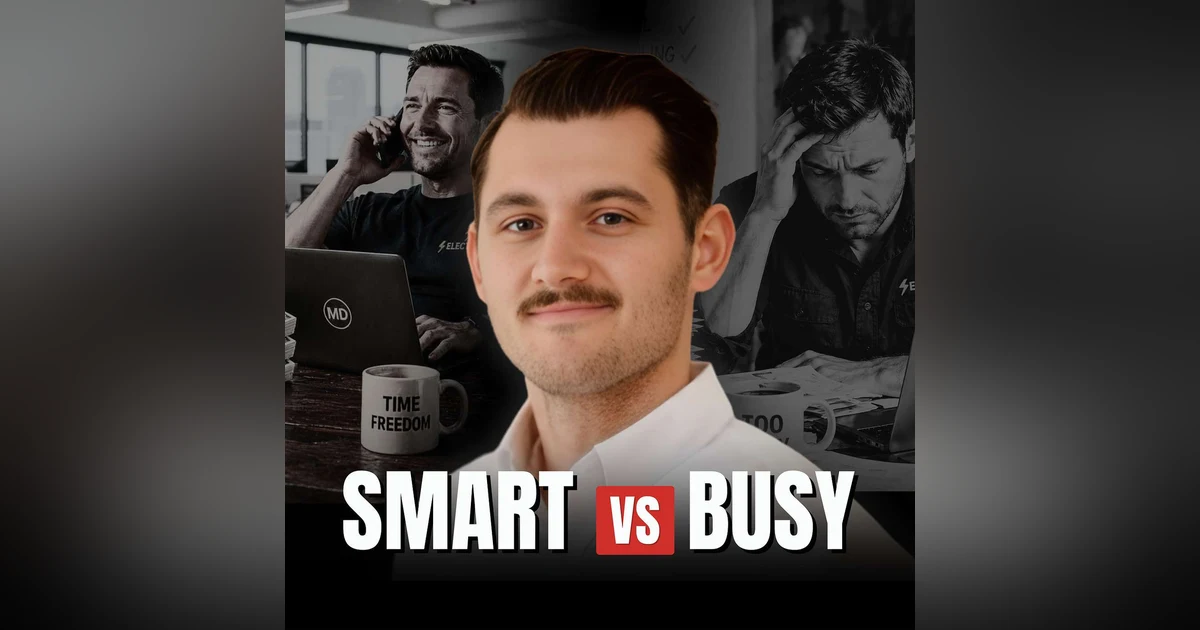


If you’re an electrician stuck doing payroll, hiring, admin, and back-office chaos this episode might be the unlock you’ve been missing!
Because the truth is most electricians don’t have a lead problem, they have a leverage problem and it’s costing them time, money, and growth.
In this episode, we break down:
- Why most electrical business owners get stuck at $500K–$1M
- The hidden “backend gap” killing your growth
- How service actually becomes your best sales strategy
- Why A-players won’t join your company (and how to fix it)
- The real cost of doing everything yourself
- How to buy back your time without losing control
- The system smart electricians use to scale faster
💡 KEY TAKEAWAY
Service = Sales
The way you handle the small things, payroll, communication, follow-up, systems, is exactly what determines:
- If customers trust you
- If employees stay with you
- If referrals come in automatically or if you stay stuck.
🧠 WHY THIS MATTERS
Most electricians try to grow by:
- Running more calls
- Working longer hours
- Chasing more leads
But growth doesn’t come from doing more, it comes from leveraging more and that starts with fixing what’s happening behind the scenes.
REAL TALK FOR ELECTRICIANS : If you’re still doing admin at night, struggling to hire or retain good techs, feeling busy but not growing or stuck at the same revenue level, you don’t need more hustle. You need better systems.
⚡️ABOUT TODAY’S GUEST:
Tyler Gregory isn’t just “a payroll guy.”
He’s a systems and operational leverage expert helping business owners save time, simplify hiring and payroll, Improve team experience and scale without chaos. His approach is simple: Handle the backend right and everything else gets easier to grow.
Want help fixing your backend systems and freeing up your time? Connect with Tyler!
🎓 Podcast Scholarship Draw
Turn your support into real rewards.
Subscribe, leave a review, or follow us. each action = 1 entry.
⚡️ Monthly: Open Circuit Lifetime Membership ($1,500 value)
⚡️ Twice per year: Service Loop Electrical Packages ($5,000 value)
Submit your entry here!
⚡️Join the SLE Pro App for tools, strategies, and next-level support!
⚡️If you want portable generators to become a real revenue stream, reach out today!
📧 Email: jesse@duromaxpower.com
🌐 Website: www.duromaxpower.com
📞 Call: 909-490-5789
#ElectricianBusiness #ServiceBusinessGrowth #BuyBackYourTime #ElectricalContractor #HomeServiceMillionaire #TradeBusinessOwner
#ServiceLoopMethod #MillionDollarElectricianPlan
SPEAKER_04
Sales is everything and everything is sales, not in the acquisition. But if you think in the way you serve, down to the micro interaction, will justify if someone's happy paying a premium or someone's not happy paying a premium. So if you call and you're pleasant, that is part of your sales process. If you're quick to respond, that's part of it. If you show up to a call and you look nice, like keeping a spare uniform in the van. If you make sure that I don't smoke, you know, during 9 to 5 or whatever it is, so that the customer doesn't have to smell me, or I have my cologne with me, or you have my direct number and I respond quickly. That is sales. Because if they purchase from me the first time, those micro touches justify the additional purchase. It'll justify their IP business, it'll justify the recommendation, and they feel more satisfied in what they've made the investment in because they see the little dividends paying them over time. And I think it's just the core of everything.
SPEAKER_01
Hello, hello, hello, and welcome to the Million Dollar Electrician Podcast, where we help home service pros like you supercharge your business and spark up those sales.
SPEAKER_03
I'm Joseph Witani, and together with my co-host, Clay New Meyer, we're here to share the secrets that have helped electricians sell over a million dollars in a single service bank.
SPEAKER_00
Now it's time for sales. It's time for sale. It's time to become a million-dollar electrician.
SPEAKER_01
Tyler does not like being called the payroll guy, so don't even go there. You prefer to be positioned as uh systems and customer experience leverage expert for growing businesses. Tyler, A, how are you doing, brother? Welcome to the show. And B, tell us more about why you're so much more than a payroll guy and what we expect to learn from you today.
SPEAKER_02
I'm doing good. Uh thank you guys for having me. And then as far as you know, what what I want people to learn from me today is payroll might be the vehicle, but there's so much more to it. There's so many other ways that we can impact your business, help you get to certain points that you know you want to get to, but maybe quite haven't gotten there yet or hadn't figured out the best way to get there. So payroll is kind of what ties it in together. When people say that's the payroll guy, it's like, yeah, but there's also a lot more to it, too, as well.
SPEAKER_01
So you were introduced to us by Forrest. Forrest has been uh good to us, taught lots on this podcast as well. Currently, you know, working with us on the marketing stuff. How long have you known Forrest and how did you guys get connected?
SPEAKER_02
Uh Forrest and I have known each other almost two years now. Uh, it goes back to he had a business uh in the area I was in, had some issues with with maybe the service that they had before. He was like, hey, the guy we used to use, he only picks up the phone whenever we have a new business. And I was like, it's not how it works for me. You have an issue, your employees have an issue, you pick up the phone, you call me, you text me, you're not gonna wait on hold. We did about a couple months of that, and he was finally, you know, he realized, okay, wow, this guy's word is is true. So when stuff comes along, he sends it my way and he introduces me to people that that he believes um could help me as well, and then I could help them.
SPEAKER_01
Yeah, I really love that. And Joe, we've been quiet with you so far, man. But uh, how are you doing today? And and we're gonna go through some cool service stuff that Tyler actually did. I'm gonna tell you guys a little story about uh how Tyler and I came together and how he got to this podcast. But how are you doing, brother?
SPEAKER_04
I'm doing great, man. Honestly, it feels like a great day to have a great day. I'm specifically blessed to be on this side of the earth. You know what I mean? Like it's just one of those days you wake up on the right side of the foot, or right up, step on the right side of the bed on the right foot, ready to go. Definitely not gonna edit that one out, right? But no, I'm feeling good. Everything's going smooth, and I'm actually excited to learn from Tyler as well today, too.
SPEAKER_01
Yeah, that's really cool. Service is the thing that stood out to me about you, Tyler. Uh, that's the reason that Forrest originally introduced us. He just said, look, this Tyler guy has been standing on his head to service us. And you kind of just mentioned that it's so much more than payroll. There's a service that you provide to people. And I really want that to be a takeaway, too, for electricians today. And not just for payroll services, like Tyler should be an inspiration for you guys also to understand that I think everything on our PL, everything that we pay for or need a service for in business, can have an excellent service aspect to it too. And I really believe that's the fight that we're after for your journey to become a million-dollar electrician. So if you guys need help on the HR side and you want someone that's actually in your corner, I really think that's what today is about, understanding what someone can really do for you. And so when Tyler was introduced to me, we had a quick brief call and really looked at some of these same questions that we'll go through today. Like, how can you help the people that we help? Because that's what matters to us. How do we advance them in their journey towards becoming a million-dollar service enterprise? And then I ghosted Tyler for like six weeks because it was December. It was it was so busy. And Tyler's follow-up game is sick, man. And I don't mean sick as it'll disgust you and make you unsubscribe. You literally sent me a couple of coffee cards. I want to thank you for that, the Starbucks cards. Uh, super kind. And it reminded me of the old bottle of water, Joe, right? Like here's a guy that literally just wants my attention, appreciates us, and uh, I really appreciate that. What went into mind when I said the bottle of water, Joe?
SPEAKER_04
So I love learning about car sales because actually, if you talk about the bottle of water, that's where it is the most prevalent. You'll find something where it's called the law of reciprocity, where you do something that seems small, innocuous, like really not a huge deal, but it has such an emotional implication on top of it. So, like when you go to checkout and you're getting ready to buy the car, or the guy's going to finance, he goes, Hey, by the way, can I can I get you a bottle of water? Do you like some snacks? The manager, the finance manager will literally ask, Hey, did you take the water? Did you take the snacks? Because it shows that there's gonna be a reciprocity attached to it. So when I heard Starbucks cards, I'm like, nice. This guy knows what he's doing. A five dollar card is gonna be worth 10x dividends, 100x dividends.
SPEAKER_01
So, Tyler, be honest with us. Do you have a KPI for how many Starbucks gift cards you're giving out each week? Or am I actually special?
SPEAKER_02
He's not gonna admit that. This one's different. Um, this is a little different, but yeah, I do we do keep track of of how many we send and just like, hey, did this make a difference? What's crazy is I get more that come back to me because people don't use them or they don't read their emails. So actually, if someone even opens it, it's like, hey, at least they saw there's the gesture. If they take advantage of it, that's on them, but they saw it. So that's yeah, that's that's the biggest part.
SPEAKER_01
That's a good note. I'm writing that down. So expected return on these because people don't use them. By the way, I don't know that I used mine. I definitely accepted the gesture. I opened it. Did does that mean it went back to you?
SPEAKER_02
No, I haven't got a kick, I haven't gotten one for yours. I think I did get one for the for the dinner in, though. I don't think you used that one.
SPEAKER_01
Yeah. Okay, okay, fair enough. So I gotta go to Starbucks quick before Tyler takes it back, you guys. Uh but I'll be back before the end of the episode. I'll just piece out here for a minute. No, go ahead, Joe. Sorry.
SPEAKER_04
Yeah, no, I was gonna say that it's really cool because I love this particular concept. If you ever received five cents in the mail with a promo, like, hey, this is just here's a dollar for your time. We just want to say thank you so much. There is math that proves that by sending even like loose change in an envelope, people will say, Oh, well, at least I'm gonna return it back to you. Like, yeah, you gave me a dollar, sends cost 25 cents. Yeah, let me return it back to you. Thank you for that. At least you know you made the connection and the law of reciprocity has taken hold. So at least now you've earned their time. So it's so cool that you track that. Tyler, massive amount of respect to do so.
SPEAKER_01
Yeah, really good stuff. Uh Tyler, I want to shift into a bit of what you do. Where do you see uh business owners, electricians kind of missing the most value, time, money that your services help with?
SPEAKER_02
I would say something that came up on an episode that came out yesterday being stuck with admin work, not being able to work on the next thing. So, with especially with owner operator in the skilled trade, they're on the go, they're quoting, they're on the site, they're helping guys get on the site. All that background, back office stuff is stuff that one, they don't have knowledge of because it's not it's not where they spend their time. Two, it's complex. And three, it frees them up to keep moving. And I think being able to have someone like myself, when you have those little questions of, hey, I just hired a guy, we're confused with XYZ. Or, hey, I just took a job in a neighboring state. What do I need to do? Because those are things that, you know, they see an invoice or an opportunity come in to, you know, go service a home or a business or whatever it may be, and they're not going to turn it down because they don't know what tax IDs they need in the neighboring state. They're gonna say yes and then figure it out, just like the rest of everything. So that's why having someone like myself that they can lean on, shoot a text to, hey man, we got in Nevada. What do I need to do? I got two guys in there now. Stuff like that.
SPEAKER_01
How do you get the answers to those questions? Have you been like is this an experience thing and you just spend years and memorize all of it? Or do you guys have like a bank of how does that work, man? How do I know your answers are gold?
SPEAKER_02
A little bit of everything, like with paychecks being the size that it is, there's answers in there that I can find. If it's something that I do not know the answer to, I'm on the phone with our tax team, with our implementation team, with my direct manager, whatever it is. But it's kind of like anything. Payroll is not like an exciting industry, but when I got in it, I realized I know this stuff, and you just go down rabbit holes and you find the answers to everything, right? One opportunity leads you to finding a new answer for something else.
SPEAKER_04
It's almost like the code book. It's not knowing everything, it's knowing where to find the right answer. Exactly.
SPEAKER_01
No, that's a really good insight. So I'm really feeling what you're saying is then you saving electricians' time, business owners' time, leveraging your own. And because you spend so much time on this, it becomes your expertise. And Joe, to use your analogy, it's kind of the equivalent of like, if you're the homeowner, don't read the code book. Just we'll take care of that for you because we spend so much more time in this. Right. Have you like you mentioned paychecks being pretty big? Have you worked with or around or understand like ADP versus paychecks? Like, is there really a difference between you guys? How do you see that big picture?
SPEAKER_02
Yeah, there is a difference. At the end of the day, I think it's the people, the people that you're working with. There's great people at both companies. I've spent time at both companies, so I know that. But I just think it's the person, whether it be on the other side, you know, of the table or the other side of the phone that's responding and helping you out.
SPEAKER_01
Do you because you know this industry better than us? I mean, from an electrician standpoint, Joe, you probably share this. Like if I'm signing up for ADP or paychecks, it just seems like, hey, here's this huge cruise ship that's going this place, and we just get on there like the Titanic, you know, you're just kind of herded in. I never really see it as a single person, I guess, from from my perspective. Would you share that, Joe? Does that make sense to you too?
SPEAKER_04
Yeah, it feels like in today's day and age, there is actually a premium on personal experience that people often overlook because I'm sure, Tally, you you can imagine this as well. You're used to working with corporations and conglomerations and these faceless businesses. But when you get the opportunity to work with someone you actually get to talk to and you know on a first name basis, I'd pay more for that because I have the ability of saying, I know the person is trying to help me and I believe them because there's a face I'm talking to rather than a chat bot of some sort. Absolutely.
SPEAKER_01
Yeah. So even where I'm going with that too is like it can feel like, I mean, sure, we get an account manager, we get a person that that's there to hold our hand, but at the same time, you don't always get a person that seems like they're coming out to sprint for you. Tyler, being on the inside, and I I don't expect, I hope this doesn't get you in trouble, this question at all, but are we naive in not seeing that there's actually hundreds of people like you that are really willing to work for us? Or is it kind of like maybe an 80-20 rule? Is there just a few, a 95-5? Like, how do you see yourself in that environment and when you look around?
SPEAKER_02
I think, and you know, not to be in a vein at all, but I think the level of care that I have for the person on the other side is what separates me from a lot of people. And it's not just payroll, it's not just HR, it's any industry, the same way you guys do with your clients, right? Like, really care how it impacts them, how they get to the next step. And I think that's kind of where I sit too. Like, hey, if you don't have to worry about slowing down to do these tax IDs, what do I do with my W-2s? I got somebody, are they a 1099 or are they a W-2? How do I classify that? Just making sure that they have the right answers, that they're moving at the pace they want to move, and just be in there to support them. That's the biggest thing in my opinion.
SPEAKER_01
Yeah, that makes sense. And and I think that tracks with what we're trying to do, Joe. I think this is the same thing in a different industry. Like, are you seeing the parallel there?
SPEAKER_04
Yeah, and the thing that comes to mind is almost like I got like a stitched bitch in mind where I feel like because we train service and because we have such a focus on service, we're constantly seeing a lack thereof in every industry that we touch. You know, and it's just really cool and really refreshing to find someone in a parallel trade that's like, okay, you may not be an electrician, but you have the same focus on wanting to get the client where they want to go while also wearing a white glove the entire time. Like it's just it's such an unexpectedly undervalued thing that people don't pick up on until they experience the difference. They're like, Okay, yeah, no, now I get it. Now I know why you charge what you charge. This makes sense.
SPEAKER_01
We were even earlier in a meeting, Joe and I, we were talking about your arborist. Again, you guys remember the arborist episode. It's a different guy, but it's the same problem of like, it seems you can't get people to do stuff for you for money, even anymore. Like, it's the craziest thing.
SPEAKER_04
Yeah, I I'll I'll laugh at that because you guys get a laugh at me in my situation. Um, you know, I love trees, I love landscape, I like getting the property taken care of, and I wanted to add some flowering trees and some willows and redo the malts and wood chips and fertilizer. I wanted the whole nine yards and I even cut it a chase before he even gave me a quote. I'm like, listen, I want to buy and I want to teach you how you can sell to me so that I will buy. You win, I win, just please do these things, and I will write you a check, and we both go home happy. And he sent me the wrong estimate. Then he sent me the wrong estimate again. Then he said, Well, I don't really know how the website works, but you know, here you go. Um, no, I you can't pay for this all at once. You gotta go through different links, you gotta physically mail it in now. No, I don't know the differences between anything. I'm like, you know what? All right, fine. What it the minimum I asked for is this. So instead of taking like a$7,000 job, he ended up getting like a$2,000 job because it was like I couldn't deal with it anymore. Like, just give me what I asked for. You didn't listen to me, fine, but I still need the things I need to have. So sign, send, done, make it happen.
SPEAKER_01
Yeah, so I'm in a class earlier, too, just the same as like, well, what is service really? That seems to be the next question. After we figure out our service rate, we start getting momentum. Well, what do I say yes to? What do I say no to? And for me, I'm like, hey, if it pays my service rate in the ways that I want to get paid with a 50% deposit, I'll put a skirt on, climb a ladder, and clean her gutters. I don't care. I'll I'll mow your lawn, right? I'll I'll polish your rims, I'll do anything. And I just yeah, it's crazy how people are like so above this. We put our ego in the way of just the options to serve someone. It's the craziest thing.
SPEAKER_04
One thing that specifically comes to mind is I remember people of different teams when I was out in the field were really frustrated with me because I would quote whenever we'd do like landscape lighting or perimeter lighting, that I would go around the entire property and I'd bring a hacksaw chainsaw, like a portal, like a pole saw, and I would trim all the trees around it so that the trees and the lights would get better coverage. And people would be like, I'm not a landscaper, why are you making me do this? They're paying you$400 an hour to do it. So it doesn't matter what you're doing, like just serve them, they're happier if you do it. It's like don't grumble about having to do the thing. You're being paid to do the thing. Put on a smile and do the thing.
SPEAKER_01
Do the thing. Podcast producer Tony here. Could you go back and make it look like Tyler said he would wear a skirt and climb a ladder and not me? Or can we just adjust the podcast for that, please? Uh Tyler, you must be relating to this. Um, you know, we're just talking about going outside the boundaries of our our, you know, our own drawn boundaries of our employment to do more for people. What are some examples of things you've gone outside of what you're expected to do to serve someone when you're working with them?
SPEAKER_02
Yeah, so it's it's funny that you mentioned like doing things that that aren't technically your title because I have service is not mentioned in my job title at all. But in my mind, that what you do to others will be done to you. So if you continue to work for people and you know do the best, like you know, I'll call in on behalf of a client, restaurant owner, landscaper, whatever the client is, they'll text me with the issue. Hey, give me five minutes, it'll get done. I'll call in, and sometimes the internals I'll get asked, why do you call in? Why don't they just use the chat box? Because I had the time to call in, I had the ability, and they know someone who has a business, and they're gonna give that same feedback to their friend who's a business owner. And that's how I continue to scale and I continue to grow too, same way. I love that.
SPEAKER_01
You it's like you just rubbed a wound that's already sore. Here's where AI is at for like calling people outreach. AI is very good at quickly messing it up for a human to recover. I've never said that before publicly, just came up with that based on your comment, Tyler. But like that's truly what I feel. Like, I needed to contact a lawyer a few months ago just for some family stuff to make sure we were within our rights with uh some stuff going on, and and it was good. But AI picked up the phone and messed it up before I ever got the human that made it well. To me, I don't want to talk to AI. I want to talk to a human that can customize their prompt to answer me in the way that I want to be answered, not robotically, through some uh bank of text that it's pulling from and realizing what to say next, even if it is the right thing to say. Does that make sense?
SPEAKER_04
A thousand percent. You know, the cool thing is that there's a huge difference between tradespeople as well. And Tyler, please back me up here if this is something you experience as well, where you'll have someone say, Well, I've got to do it in a cheaper way, because the customer doesn't want to pay for that. But then you, the customer, are specifically saying, I'd pay more to not press zero and then one and then two and then yell representative at the top of my lungs. Like I just want to talk to someone and I'll pay you the money that's worth staffing someone to do it. But some people just can't seem to get that. Tyler, where were you at with that?
SPEAKER_02
Yeah, I I think you know, you look at if if I'm in a you know a business meeting and the client were to say, hey, we have other options we're looking at, they're a little cheaper than you. I say, okay, cool. And then, you know, they tell me who who those options might be. I always ask, like, can you do they have somebody you can shoot a text message to when you have a question? Or when you add a new employee and they don't pop up in payroll and it's 437 and you got to run it by five. Are you able to text that person, get them on the phone? If not, that's a soft cost that's baked into it. You're not charging me. I'm not every time you call me, I don't charge a fee for it. The business and the service that I give makes up that difference. And I would say that it makes up that difference 10x, right? That that that level of comfortability, just being able to say, hey, Tyler, got a quick question, two minutes. Sure, I'll call you in a moment. That's huge, in my opinion.
SPEAKER_01
I agree. Yeah, there's nothing worse than being a client of someone and still being victim to the gatekeeper. Yeah. Why do I have to email my issue end of day? Why do I have to talk to your assistant, for example? Why do I have to, you know what I mean? How do I get a hold of you? I love that. So are you saying that you give out your personal number, by the way, Tyler?
SPEAKER_02
Yes, I do. Forrest has it. Him and I texted yesterday about something unrelated. My clients have personal numbers because that's what I pick up. I call them off the 678 number, and that's my personal number. I don't have enough time for two phones.
SPEAKER_01
So let's be honest for a minute and pretend Forrest wasn't gonna listen to this and make sure you didn't say something nasty towards him.
SPEAKER_02
I asked him before.
SPEAKER_01
Yeah, yeah. Is Forrest the kind of guy that messages you like four times a week? Or has he been pretty good to you?
SPEAKER_02
No, he's if one big thing pops up, me and whoever else internally can handle it. Hey, Tyler, this is so-and-so. Can you help him with XYZ? Done. He doesn't blow me up every four, three, four times a week.
SPEAKER_04
I have a slightly maybe controversial opinion, and I'd love to know your stake on this. I think there's a big difference between a personal number and a direct number. Reason being is that when I was in the field, at one point I gave my personal number, meaning like this is the number my friends and family have that can call me. And what turned me off of that was I had a client call me on Saturday night at two in the morning, piss drunk, yelling about his generator and wanting a breakdown from it. And I had to literally de-escalate him at two in the morning because he was telling me he was gonna do crazy stuff if I didn't. But I would always give a direct number to me where you could say it could maybe go through a landing app or something like a ring central, where you always will get me. But if you were gonna call me at two in the morning, it would make sure that I get the message in the morning. What are your what are your thoughts? Do you feel like personal is the only way?
SPEAKER_02
It do it or would direct also be allowed? No, I would say direct would be great. I'm just too far into it at this point. And I did try the app thing so it didn't ping, ping, ping, ping all the time. Because I'm in Atlanta, so I've got clients out in California. When they're done working, you know, and they're ready to talk. I'm putting the kids in bed, right? It might be nine o'clock. But they know that hey, he'll respond whenever he can. As quick as he can, he'll respond. So yeah, I think I'm just too far into the game for that.
SPEAKER_01
Hey, you guys, if this episode sparks something for you, imagine stacking that every single week. That's how businesses stop flickering and start running steady. If you subscribe to the show or leave a review if you're on audio, and if you're driving down the road, please pull over when it's safe because I've got something you're not going to want us to get. For every person that subscribes and or leaves a review and fills out the form below, letting us know that you did that thing. We're going to draw one monthly subscriber for our open circuit lifetime membership worth$1,500. And that's not all. Every six months, we're actually going to draw another subscriber for our$5,000 scholarship, which you can use for any of our electric service packages to get your business and your service rocking better than ever. Come on, guys, let's brighten this thing up. Is it going to be you? Back to the show. True or false question for you. Customer service equals sales, Tyler. True or false, and why?
SPEAKER_02
True. Everything is customer service and everything is sales. So if someone who I've may have already made a sale to calls me and I'm picking up the phone providing the service, that sits so well with them. Most people, there's some people that don't care, but most people that sits so well with them that if they're at a dinner party or they're at a luncheon or they're at a some type of marketing group and someone mentions payroll, HR, hiring, hey, I got a guy for you. So my service is allowing me to sell through other people.
SPEAKER_01
Okay. And so therefore service equals sales.
SPEAKER_02
Yep, service equals sales.
SPEAKER_01
You also said everything is sales. What did you mean by that?
SPEAKER_02
So from the flip side, it's you're always having conversations with people, whether it be, hey, I got an issue, my employee this, my employee that. Man, they want to be weekly paid. All these young new guys, new kids coming out of school want to be paid every week. Okay, we can help with that. There's another avenue. Hey, have you looked at ZipRecruiter or LinkedIn? You mentioned you didn't have enough people filling those roles. There's another avenue right there. Hey, my accountant said we need to take a look at tax advantages. Oh my gosh, have you thought about putting a retirement plan in place? There's another avenue.
SPEAKER_04
If I could jump in for a moment, I think you could not underline that last statement enough. And I like to add a list of context to it, because I personally agree you're right. Sales is everything, and everything is sales, not in the acquisition, but if you think in the way you serve down to the micro interaction, will justify if someone's happy paying a premium or someone's not happy paying a premium. So if you call and you're pleasant, that is part of your sales process. If you're quick to respond, that's part of it. If you show up to a call and you look nice, like keeping a spare uniform in the van, if you make sure that I don't smoke, you know, during nine to five or whatever it is, so that the customer doesn't have to smell me, or I have my cologne with me, or you have my direct number and I respond quickly, that is sales. Because if they purchase from me the first time, those micro touches justify the additional purchase, it'll justify the repeat business, it'll justify the recommendation, and they feel more satisfied in what they've made the investment in because they see the little dividends hanging over time. And I think it's just the core of everything. So I love that you brought that up.
SPEAKER_01
I'm gonna drill deeper. Why not? Let's take this one right down into the lava here. I think it's just working agreements. I think that's what these really are. And if you think about what an agreement is, I always picture two people shaking hands. That's like the oldest form of agreement. We agree, shake on it, pal. Like this is a verbal commitment now christened with uh two people mating their hands and literally smiling at each other and going, Yes, we're on the same page. But what does that mean really? It means that we have an understanding, and it means that we trust each other to hold up our ends of the bargain, the deal. If you boil it down, this all makes so much sense to me. And yet what gets in the way of it is that dirty word sales and the resistance that is just here. And I think it, you know, it's all the rotten apples that have fallen from the tree, of course, and the times we felt pressured to have an agreement where we didn't feel they understood us, we didn't feel trusted, and maybe we felt like we didn't have a choice. And again, full circle back. I think that's really why we're here today is to let you guys know again, with Tyler and with us and what we teach, it's homeowners have a choice and business owners have a choice too. And I hope that you not only find a payroll junkie like Tyler. Sorry, Tyler, I had to. You said not to call you a payroll guy. I just I just elevated, call you a payroll junkie, but to find an accountant that gives you those feelings too. To have bookkeeping, to have every outside service, managed uh service in your business give you that feeling that I've got someone in my corner who's willing to go to bat for me and even take my call when it's not convenient for them. Huge piece here. Huge piece. You guys deserve that. Systems versus chaos. What comes to mind when I say that, Tyler?
SPEAKER_02
At the beginning of the day, if you have nothing written down, let me go back. The night before, you're getting ready for bed. Tomorrow, if you have nothing written down in some form or fashion, you wake up, your phone's pinging, emails are going off, it's chaos. But if you know, hey, these are the five or six things that are priority, these other things will kind of sprinkle in, right? It's like that old, that old uh, you know, they talked about whenever you first get into sales, you first get into a professional environment of you got a cup, you fill it with rocks, okay? Yeah, and you fill it with sand, then you fill it with pebbles, then you fill it with water, right? So making sure you have those rocks in place for your day, that way it doesn't turn to chaos.
SPEAKER_04
I love that expression. That's an amazing analogy that I don't know if enough people are familiar with.
SPEAKER_01
And where do you see then electricians and business owners falling short of getting their rocks in the cup and having that organization? Where do you see the most chaos from your angle?
SPEAKER_02
As they go to scale, right? It's easy for them to, hey, we're gonna get our business formation, we're gonna set up our LLC, maybe an accountant helps them out, and then they get to we're hiring our first person. Okay, now we're gonna hire four people, right? That's where that gap is because those people they're hiring. If you're a candidate and you're like, hey, how much do you pay? What's the hourly rate? When will I get paid? Do you offer any benefit? That's whenever that business owner who's been running it himself or herself and has one or one other person that's just tagging along, that's when they get into that scenario where like, oh crap, I gotta go figure this out now. And they go on Google, and yeah, they can get some good answers there, but they're gonna get the quickest answer, and that's not always the best answer.
SPEAKER_04
A surface level search compared to a deep search. Agreed.
SPEAKER_01
At that sort of, you know, a lot of our our audience here is uh they're kind of just short of maybe looking to breach seven figures or just getting past and in search of multiples at that kind of 500 to to a million range per year. Where do you see being able to uh to help people the most and kind of the unlocks that really help people get past uh their next goal, their next level from your perspective, Tyler?
SPEAKER_02
I think it it becomes so you know they're at that that number, they're trying, and then they're trying to get to above a million, right? So typically there's only 24 hours in a day, and there's only one person, right? So they need more help to get, they need more bodies, they need more skilled labor to get there. And so if you look at statistics from a skilled labor industry, like there's a shortage for every five electricians retiring, only two new ones are entering the workforce, right? So now you're talking a much smaller talent pool. So, how do those small businesses and those small companies go get talent out of that to help them self-scale? And that's the key right there is getting talent in the door and keeping talent.
SPEAKER_01
Strong point. Do you guys help with talent and retention, do you think, too?
SPEAKER_02
Yeah, absolutely. I think uh that's why I said don't call me the payroll guy only, because there's so much more, right? It's hiring, it's onboarding, it's when you have them in, you know, if if the business owner gets to a certain point where, hey, we want to offer health insurance, we want to offer retirement, we want to give them an F FSA, HSA, something like that, that is where we also help, right? Payroll is just that's the car. The rest is all the stops that along the journey, right? That's where I think the biggest difference in taking that next next step is hiring that really good employee or few employees or whatever it may be.
SPEAKER_01
Yeah, sounds like solid advice, man, for sure. So if you're working with someone in that that range that we're talking about here, and they're kind of new to these concepts, and they just reach out or get introduced to you, and they haven't really used payroll service before, then they know they want to capture some of that talent, but they don't have these things in place. Like, how painful of a process is this? Who what steps do you have to go through to start thinking about the future and getting that talent, do you think?
SPEAKER_02
I think the first thing a lot of, you know, I would call them SMB, small to medium businesses, would go through would be they're gonna go on and like sign up for LinkedIn or sign up for um ZipRecruiter or Indeed, and they're gonna have a huge monthly fee where it's not that expensive. And most of the time, if they're not using it, they don't need if they're not utilizing it, they don't need to be paying for it, right? So that's one of the biggest things I see is people do that. And we have conversations all the time with someone who's a payroll client, and they'll say, Oh yeah, we use Indeed. And I'm like, Oh my goodness. Like I wish we would have had this conversation before, because one, we can help your bottom line, two, you can do it through your payroll, your Paychex Flex app, and it's one login, which is so much easier.
SPEAKER_01
So you guys have an app for this too? Yes, sir. Yep. Yeah, so what is that experience like then for the average uh business owner now? Everything's pretty fast and and self-managed for you. Like, what do you actually need from the business in order to manage some of these items for them?
SPEAKER_02
Are you saying as far as like if if someone, a new person were to come on, be looking for start, how does that how does that set up, that implementation look?
SPEAKER_01
Yeah, actually, beyond that now, if we're already set up, then how much time is this saving me? Like, what do I really need to do for you to keep my payroll up and and have my my benefits set up, et cetera?
SPEAKER_02
It would depend on each client, right? It would be everybody's different, you know, depending on how they maybe track their hours or depending on when they're ready to turn on a 401k or health insurance or rates, stuff like that. It's all very quick. That's the thing that like when someone has questions or concerns and they want to get moving, when they ask me with a qu when they reach out to me with something, it's hey, I can handle this for you. I'm not the person who maybe sets it up for you, but I'm a part of that whole system, right? They want their guys to clock in in the field to save time. Like, that's we're gonna get that set up for you. It's gonna take about a week or whatever it may be for whatever service we we're providing.
SPEAKER_01
Yeah, that makes sense, man. For a lot of guys, maybe listen to this, they haven't quite got full control of their pricing yet. They don't maybe fully realize what they can uh do to position themselves a little bit better. And for those, we often hear guys say something like, Well, what is this gonna cost me? How could I afford this? What is that cost, would you say, on average? Like, how could we say that from here on the podcast and be somewhat accurate? And B, what do you think is the cost of not doing this?
SPEAKER_02
Well, if you don't have any employees, there's no cost at all. You don't have to worry about it. But for those that do have employees and they want to take that next step, they're hiring people, they want to pay them as a W-2, or if they have 1099s and they don't want to go back and add it all up and they just want the system to do it for them. It's dependent upon one, how often they pay, two, how many people they have. And the third would be what level of service they need, not service from me, but functionality from a system, so to speak, right? Not everyone needs the same things, right? There's some companies that need a lot more bells and whistles than others, so that would kind of depend upon. But I mean, you're typically looking at your normal SB somewhere three to four hundred dollars a month, and that's kind of on the higher end because I don't want to undercut people and then be surprised by it. Yeah, that's I'd say that's probably a fair range to say.
SPEAKER_01
Yeah, that's really good. How long does it take to get an accurate quote for from you to understand? Okay, in my situation, just a few guys, this is how we're paying. Uh, is that usually just like a discovery call they do with you or an application people submit?
SPEAKER_02
Discovery call, just so I make sure there's nothing I'm missing. And not by like because I want to get everything I can, but because there might be certain things that they're paying for elsewhere that aren't benefiting them that we could just include. But I would say like in 10 to 15 minutes for the most part.
SPEAKER_04
I love that. I think it's absolutely awesome that you do that because sometimes electricians don't pick up on that as well. You know, we say the same equivalent would be we dig a trench because we're doing something. But then saying, oh, well, they're gonna pay a landscaper to come back and lay grass seed and topsoil and then have to set up sprinklers when we could just say, all right, my top option is I'll dig the trench, but then I'll also topsoil it, tamp it, grass seed it, set up automatic sprinklers, it'll all be on one package. I'll take them back at the end of the season. You don't have to have anyone else involved, right? One check, it's all handled. So even better if that saves them time and money. So I love that you do that. That's a great mentality to keep. Absolutely.
SPEAKER_02
And I think to add to that, when it comes to another software or another system, that's a whole separate set of logins that they have, a whole separate set of logins that maybe their employees have to have. And that's just something else that slows things down. And owner operators know like moving slow does not benefit them, especially moving slow with administrative type stuff.
SPEAKER_01
Yep, for sure. You mentioned behind the scenes you helped someone during a hurricane. Is that right? Yep. What was that about? What's the story here?
SPEAKER_02
So this was uh I used to live in in Asheville, North Carolina, went to college up there, lived there for a short while. And uh during the hurricane, I was back in Georgia. We had just moved probably two months prior. I had a lady call me and she knew that I'd move. She didn't reach out to me for stuff. She calls me, my phone rings. I pick it up. Hey, how are you? Hey, Tyler, we don't have surf, and the phone's cutting in and out. She drives down, she calls me back, she says, our building was completely wiped out. I cannot get in touch with anyone. Yep. Can you help me? We need to run payroll and pay the people for two weeks out because we don't know when we're gonna have power, when we're gonna have internet. And you got to think, Western North Carolina was just absolutely hammered. There are people who didn't have running water or or or power and electricity for months. So we sat on hold with her for 45 minutes, got her payrolls taken care of, and I didn't ask a thing. I was like, have a great day, like praying for you and your family. I get an email, you know, a week or two later, just absolutely raving about the level of service, and it didn't cross my mind what I had done until she sent it, and I was like, oh my gosh, she couldn't get in touch with anyone. But she knew that if she called me, I'd pick up and I'd help her. And that's kind of what I would say that that that one scenario kind of forwarded my level of wow, you give a little bit to people, and it took me, yeah, it took me 45 minutes, but that's not much. She's going through so much worse things than I was. All I had to do was get on the phone with her, get it processed, ease her mind. And it just it changed a lot for me, I would say, from the service side at that point.
SPEAKER_04
Can I compliment you specifically on that? Reason being is my best friend lives in Asheville during that situation and was telling me that literally like the mud slides and the water slides were washing away buildings or washing away cars, and it was so out of nowhere, and no one was prepared for it, that I can only imagine what that business owner had to go through because I like I saw the pictures of it happening and like the live videos, and it was like biblical level flooding, it was insane. And to know that they were going to be willing to pay their people two weeks out because they didn't know sounds like already you're working with a great person who has good moral ethics and character, but then is in an extreme overwhelming above and beyond, like way beyond what they were expecting in anything that was predicted, and you still answered and got it taken care of. Like that's literally the knight in shining armor mentality. Like you got there, you did the thing when it was substantially worse than anyone was gonna predict it was gonna happen. So, like, good on you, man. If nothing else, you've got my respect just for that one specific scenario. Thank you.
SPEAKER_01
Good on you, high level of service for sure, Tyler. Thanks for sharing that story. Uh guys, we're gonna uh quickly hit a win of the week. Joe, I think we'll not go into all the details, but you most recently um spoke with Emilio, I think. Emilio had a massive day in service and from a very small town. Joe, what do you know about this one?
SPEAKER_04
Well, I haven't gotten a chance to really dig into what we can as far as the depth of the situation, but I can give the overalls in that um he had came in and said that things were you know a little bit rough and he needed help designing some solutions for a customer. And we had two specific different jobs that he was really like, I need help with these. They're can be really they could be gone, the customer's really gonna be tight, like they're really haggling on price, it's a big thing. And we did an options class that we hosted. I built two different solutions with it, actually, two sets of six. We built two whole presentations, and then later we found out that one of them was a platinum, another, I think, was also like either a gold or a silver, and it was like a$38,000 day. And you know, the level, I can't really speak to the depth yet, but the amount of win that he needed was almost that to the dollar, and it really worked out and it came out and really helped him in a big way. And honestly, I feel beyond honored to be able to serve him in that regard because at the end of the day, that's all we want to do is not only educate people on what they need to do and how they can do it better, but it feels like a personal win to know that like there was something that wasn't going right, and then when we needed the thing to happen at the exact moment it needed to happen, you know, Lord smiled in and gave him what he needed. You know, it's just it's really an amazing thing. Really, really proud of him for pulling it off because we may be the GPS, but he was the one driving the car, making it happen. So super proud of him.
SPEAKER_01
Yeah, Emilio's proof again. Uh, we were in a marketing class with him looking at his service area, very small, uh, very sparse. Uh, we're talking, you know, the immediate area, barely over a thousand people. Overall, within 45 minutes, you can scrape together about 10,000. So, so really quite uh quite a low population. And so it answers that question again. Will this work even in a small area? Absolutely. Um, those are massive wins. Again, revenue is just a sign of of trust in the working agreement that he was able to create. So I think that fits perfectly. Great win of the week. Congratulations, Emilio, on that one. Tyler, what didn't we dig into yet that we should have? What do you know back there? What's the big lever that's still out there? How could we use you to maximize our business? Is there any rock uncovered here yet?
SPEAKER_02
I would say one of the things that that I focus in on um when it comes to certain industries and certain client sizes is the what the rest of the market is doing, right? And I say market as the workforce. So you look at by 2030, 75% of the workforce will be made up of Gen Z and millennials. So, what do those employees in the workforce want from their employer, whether it be not just not just money, not just compensation, but the leadership skills, what they're giving off to others. And I think that's where I've kind of shifted a lot of my focus into because now we're not just having a conversation about a commodity of payroll. We're having a conversation of how do how does what what I know and what's going on in the market help you and your business go to the next step. Um, and I think those are things that you know I'm just keeping up with too. Um, I know that we talked about um like a monthly newsletter, Clay, that I would have for you and your guys' audience that way they can see, oh wow, you know, let's just say I'll throw a number out there from 2022 to 2024, an additional 50,000 apprentice electrician applications were put in. So that means that yes, there's a gap in the amount of people that are in the workforce, but it's increasing, right? What are they seeing? They're seeing AI can't take this job from me, right? So there's a job security. And that's one of the biggest things that we're seeing in our world is AI, AI, AI. Well, AI can't work with its hands because it doesn't have any.
SPEAKER_01
Yeah, really valid point, man. Yeah, I love that. Yeah, that we've seen and we've noticed that there's some big trends. I mean, the data consumption alone, uh, many people playing with AI. I mean, I grabbed an open claw machine and set it up myself, and that's another machine that's running 24 7. Uh, the grid's being taxed everywhere. There's certainly going to be energy demand, certainly going to be more backup power, more home office needs than ever before as people more and more rely on their machine. Needs to run all the time. And so, yeah, I'd agree. I think there's a ton of infrastructure to upgrade, just given the age of most areas, and given that, you know, realistically, a panel and electrical system can start to show signs of wear and tear and trouble signs within 25 to 30 years and sometimes sooner. Um, a lot of areas that guys are going to, they're still seeing original equipment in these homes. And so, yeah, it affects the trade itself and the work to be done. It affects the demand, of course, naturally. And like you said, uh, it's not replacing us. So very much in touch with that. I love what you said earlier about like needing to kind of be the best, attract the best. I saw this reel earlier. Uh, are you a hormosey follower at all, Tyler? I am. Who isn't right at this day and age? A bit of a stud. I saw this reel though, and I loved his perspective on how to become the kind of place where A players want to go. And he said it's not very complicated. Just go to another business and ask their A players to jump ship. And the reason they don't will be the things you need to focus on to build your business up to be the kind of place where they'd want to be. Tyler, if you had to guess, and and this is someone maybe at the half million mark with a couple guys, they want to start getting some A players on board and start to fight, put up a fight in that talent pool. If someone was going to say no to that kind of few man shop who's not quite established yet, what do you think is on that list of reasons why they wouldn't want to jump over in your experience?
SPEAKER_02
Uh, career growth is the number one thing I'd see. Yes, money is good, but again, I lean back to the because of the amount of people that are exit exiting the industry and the new ones coming in, you got to get that small number of talent. So they want career growth and they want to feel like their work matters. So if you can do those two things together, that's gonna bring those A players from a bigger company over to your smaller company. That's the biggest two things I would see.
SPEAKER_01
Really cool, man. Yeah, yeah, definitely. It seems like the days of just considering the wage amount. Yep. Seems like the days of just considering what the benefits are. It seems like those days are kind of numbered. It's not that that stuff doesn't matter. It's almost like assumed, though, like the market has flipped. It's no longer, I guess it's kind of like buyers versus sellers market. Now the market's flipped, and we have to really respect that we're making a sale to bring someone in. I think that's a big piece of it too. And I think it ties in perfectly with what you're saying, with like, well, what's possible for me here? If I don't want to go out on my own, maybe I've experienced that or I realize the pains aside uh with that. How can you demonstrate in your business that I could be more of an entrepreneur and have the benefits of my great value that I bring to the table without necessarily needing to take the risk of having my own company even? Does that tie into kind of what you're saying, brother?
SPEAKER_02
Yeah, absolutely. I think just, you know, there's a you talk about hormones and there's other type people, but uh you always hear the everything you want is just on the other side of fear of not doing it, right? So just taking that step gets you to where you want to be, right? And I think that's something that that a lot of, I mean, even the people that that you guys, your audience specifically, but your audience has friends that are sitting on that cusp of doing that too, right? They're just something has to make them take that step.
SPEAKER_01
Yeah, we just had a guy, Brandon, go full time because since January, you know, 80k month, just massive growth. Uh incredible, man. Incredible. And that keeps happening. Every year there's a few that do it. Uh, Nathan, Nathan Miles, you guys have heard him on the podcast, just past a million and 55 weeks of business ever. I mean, more and more of this is possible because we have the information and we have the inspiration and the community to put that together. And so anyone who's coachable can do this these days uh with that little bit of accountability. It's incredible. So you need to know people like Tyler. We got to know stuff like this. Tyler, if there's someone coming up quick, realizing this is a big gap for them today, what's the best way to reach out to you and uh see if if paychecks and your services are a fit for them and their business?
SPEAKER_02
Um I'm on LinkedIn, Tyler Gregory. And then also, like I'll provide email and phone number to you guys. You can reach out to me directly, uh text message, it's cool. However, however you guys go about it, whatever's the easiest way to get in touch with me.
SPEAKER_01
Awesome. Yeah, we'll put it in the show notes below then. Well, thanks so much, man. Anything else you want to add to this before we part ways today?
SPEAKER_02
Uh nope, everything on my on my end. I appreciate you guys having me. Thank you all so much, and I look forward to the help.
SPEAKER_01
Awesome. Anything from you, Joseph, to close this out, brother.
SPEAKER_04
You know, at the end of the day, I feel like this is just really refreshing because you know how we always say those who teach service often find the lack thereof? It often happens in even like, you know, trying to align with other people. And when you find someone that not only gets it, but actually practices what they preach, it it really is the best way to say it's refreshing. It feels like service isn't dead. People are recognizing it's good and they're investing in it. And as a result, you know, Tyler, I wish you nothing but uh peace, mercy, and blessings and continued great success because you're doing things the right way for the right reasons. And you have my respect for that.
SPEAKER_01
Mine too, man. Okay, guys, if you're listening to this, go send a Starbucks card to someone that uh deserves to work with you. And we'll see you guys again next week. Help you uh meet your seven figure service business. Cheers to your success.