S3 EP26 From Overworked Electrician to $1.6M+ Business Owner | Erik Ellefson
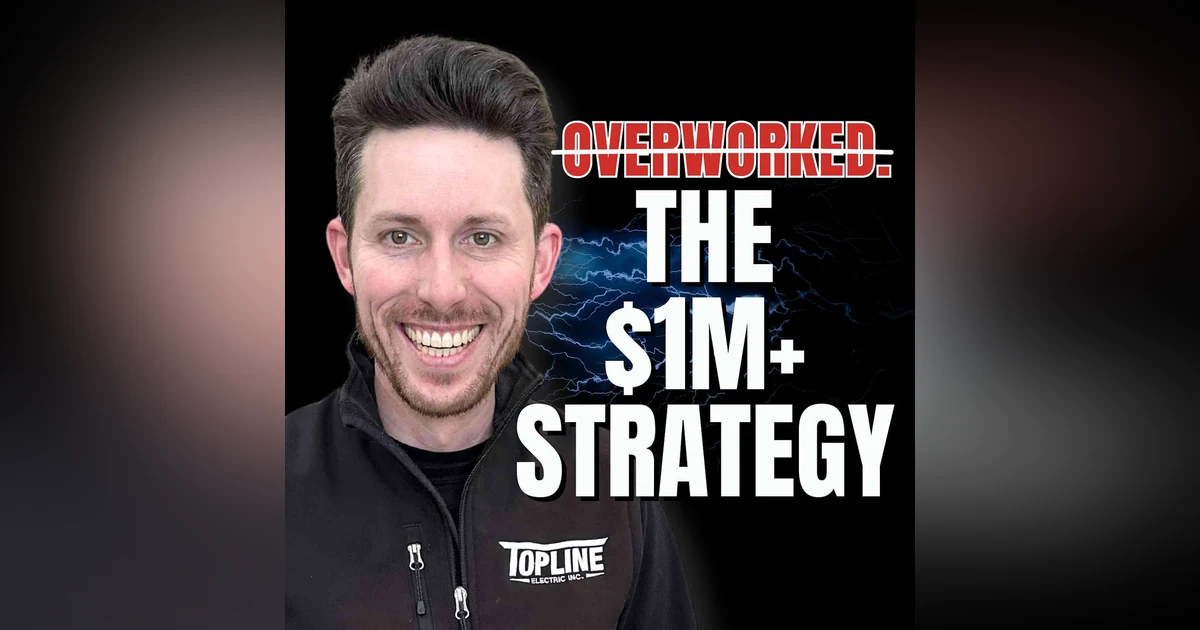


Most electricians don’t have a work problem… They have a structure problem. They’re busy. Booked out. Grinding every day.
But still stuck under $1M…
Still doing everything themselves. Still pushing nonstop.
In this episode, Erik Ellefson breaks down what actually changed.
💡 WHAT YOU’LL LEARN
- The trap that keeps electricians stuck under $1M
- Why being “busy” is actually slowing your growth
- The hiring mistake that doubles your workload
- When to hire a journeyman (and why most wait too long)
- How to finally get off the tools without everything breaking
- The shift from working in the business → leading the business
- Why better service (not more jobs) increases revenue
⚡ KEY MOMENT
“I worked all day… then worked all night… and thought that’s what it took.”
If that sounds like you… this episode will hit!
🧠 CORE TAKEAWAY
You don’t scale by working harder.
You scale by hiring sooner, building structure and trusting your process.
🎯 This episode is for electricians who:
- Are stuck doing everything themselves
- Feel overwhelmed running jobs + the business
- Want to break $1M but don’t know what’s missing
- Are tired of pushing nonstop
⚡️ We’re doing something we’ve never done before…
Service Loop Electrical is hosting our first-ever in-person event and we’re keeping it small on purpose. 26 seats total. That’s it.
The Whistler Service Summit 2026 brings together top electric service business owners for 2 days of real training, live roleplay, and hands-on coaching at Nita Lake Lodge in Whistler, BC.
You’ll be in the room with Clay Neumeyer, Joseph Lucanie, and Forrest Schwartz dialing in your sales, marketing, and operations in real time.
No fluff. Just the systems that help you earn more and take back control of your schedule. 👉 Secure your spot HERE!
🎓 Podcast Scholarship Draw
Turn your support into real rewards.
Subscribe, leave a review, or follow us. each action = 1 entry.
⚡️ Monthly: Open Circuit Lifetime Membership ($1,500 value)
⚡️ Twice per year: Service Loop Electrical Packages ($5,000 value)
👉 Submit your entry here!
⚡️ CONNECT WITH ERIK
Find Erik Ellefson on Facebook or inside the community (SLE Pro App).
⚡️If you want portable generators to become a real revenue stream, reach out today!
📧 Email: jesse@duromaxpower.com
🌐 Website: www.duromaxpower.com
📞 Call: 909-490-5789
#ElectricianBusiness #MillionDollarElectrician #HomeServiceBusiness #ElectricalContractor #BusinessGrowth #BlueCollarBusiness #servicebusinessgrowth
00:00 – Why Most Electricians Stay Stuck
00:36 – Meet Erik: 13 Years in Business
02:02 – From $1M to $1.7M (What Changed)
04:40 – “I Worked All Day… Then All Night”
06:11 – The Pressure of Always Pushing
07:51 – Why Erik Started His Electrical Business
10:07 – Confidence vs Reality in Business
12:11 – The First Job That Went Wrong
15:35 – Why Most Early Jobs Aren’t Profitable
16:33 – The Power of Mentorship
20:23 – How to Handle Stress in Business
24:00 – Why Hiring an Apprentice Slows You Down
26:00 – What Freedom Actually Feels Like
27:01 – Why You’re Stuck Working Nights & Weekends
28:42 – The Hiring Mistake That Keeps You Stuck
30:22 – Why You Don’t Need More Work to Grow
30:38 – Serving Customers the Right Way
33:16 – Building Trust = Higher Sales
35:53 – Letting Go of Sales (Game Changer)
37:56 – Training Your Team to Sell
40:49 – What’s Next for the Business
42:00 – Why Customer Feedback Matters
46:13 – Fix Problems Once (SOPs)
47:59 – Where to Start With Systems&
SPEAKER_00
Moving away from time and material and you know barely pricing correctly to joining SLE and getting our pricing in order and just realizing that how many times we go into jobs and we just look at what we're called for and we don't move on, we don't look at anything else. And then just seeing the difference of going into people's houses, taking the time, opening up their panel, looking at things in more of a bigger full picture, asking them, hey, if I see if I see something that is a professional electrician doesn't look right, would you want me to tell you about it? You know, and then being able to tell them about some other things we found in their house, letting them decide what they want to do about it. But I think I just see so much of what we're doing before. We're serving a customer well, but yet still under-serving them in areas.
SPEAKER_04
Hello, hello, hello, and welcome to the Million Dollar Electrician Podcast, where we help home service pros like you supercharge your business and spark up those sales.
SPEAKER_01
I'm Joseph Witani, and together with my co-host, Clay New Meyer. We're here to share the secrets of health electricians sell over a million dollars in a single service.
SPEAKER_03
Now it's time for sales. It's time for sale. It's time to become a million-dollar electrician.
SPEAKER_04
Hey, real quick, if you're an electrical service business owner and you're tired of figuring out alone, then listen up. ServiceStoop Electrical is hosting our first ever live event, the Whistler Service Summit 2026. It's May 29th through June 1st in Whistler, BC. Just 26 seats. You'll have access to me, Joseph Forrest, real role play, working through your leads, working through your business, working with you on your strategy. There's only 26 seats available, and we want you to attend. Whether you're new to our ecosystem, familiar with our process, or a longstanding client or fan, we want you there. So click the link below or go to go.serviceloopelectrical.com forward slash summit. See you at Summit. Hello guys, welcome back to another great episode of the Million Dollar Electrician Podcast. And today we're going to be diving in that topic specifically, how to become a million dollar electrician. We have a guest here today to help us with that. Him and Joe have some stuff in common. Eric Ellison is in the building Top Line Electrical. He's been training with us for a little while. He wants to share his story with you guys. And so we want to dig into that and just help you by understanding Eric and all the great things that are going for him. Um, Eric, you've been in business for did you say 13 years?
SPEAKER_00
It's going on 13 years. Yep. Yep.
SPEAKER_04
Holy crap. Absolutely. That is as old as my youngest daughter. In fact, she just turned 14. Is it as painful as a young lady teenager, or is it better than that?
SPEAKER_00
I don't know. I don't have my my girls are not that old, so I don't know. Um some days, some days the business is easier than uh than the three-year-old, though.
SPEAKER_04
So nice. That's what we're looking for. That's a great insight. So already someone might want to stick around because Eric's gonna teach you how to make your business easier than a three-year-old girl.
SPEAKER_02
I mean, teach me.
SPEAKER_04
And arguably we'll decide at the end if we can make it easier than a 13-year-old girl. That might be actually a landslide easy. Joe's got the young girls too. Are your girls the same age, you guys?
SPEAKER_02
No, no. I was gonna say they are two years apart. I got a six and a four-year-old. I love my little girls. They're my literally my my entire world. So, like, if there's a way, if there's anything that you guys have that makes me a better dad, I'm I'm in for it. Locked in and ready for attention.
SPEAKER_04
Yeah, for sure. Eric, just to frame this, uh, how'd the business do last year? I think we're what 1.6 and 19% profit somewhere in there.
SPEAKER_00
Yeah, yep, 1.6, almost 1.7, 19% net on that.
SPEAKER_04
Nice, man. So it's been a really good run. How many years did it take you to get through that million dollar mark?
SPEAKER_00
Yeah, we were just looking at that, it'd be like eight years. So, like 2021 just barely broke broke a million. So it says I had 20, 24% net that year. So it's working pretty good back then, too, I guess.
SPEAKER_04
So and Joe, you were kind of saying you were about seven years? Yeah, six years. I had to misguess on that. Okay, six. All right, so it's not a competition, Joe. You don't have to rub it in. Just trying to be inclusive.
SPEAKER_02
No, it's all good. It's all good. Literally, sometimes I don't know about you guys, but especially as dads, don't you feel like time just blurs in a certain way where we can't even like catch it? Like, I feel like 2012 was like last year, and now here we are at 2026. I'm turning 36. I'm like, what? I started my business at 22. I'm like, how did how did I become a 36-year-old individual? Thousand percent.
SPEAKER_00
Yeah, so you start that you started in 2020 as well. Yeah, I started in 2000.
SPEAKER_02
Okay, 2013, yep.
SPEAKER_00
Yeah, all right, like we opened like that fall or whatever, so it hardly counts 2013, but yeah, yeah, we're like the same age, opened a business at the same time. February of 2013.
SPEAKER_04
Yep. Okay, so you got the uh six-month leap. That's awesome. You guys didn't know that about each other before, right?
SPEAKER_02
No, and the funny thing is I love working with Eric. Like we were really saying before, like you're in, like every class that your team is in, I'm always looking if you're in the background, and I do like Eric, what's up, man?
SPEAKER_04
Eric, what's the feeling? Now's the hard questions. They're gonna start, man. Here's the onslaught. What's the feeling that you have in your business today, end of last year? This feeling that you're capturing now versus the pre, you know, five years ago, I guess, before you got to the million dollar, or even earlier than that. Uh what's the feeling difference between these two companies, man?
SPEAKER_00
It's a great question. I think the difference of not like I feel like before it would be like, and this is more business structure than necessarily the dollar amount, right? But just have to push all the time. You know, you're either on the whether you're on the tools or not, like you just like I was just talking to someone the other day, I was like, man, like I wasn't married, like worked all day, then I worked all night, and then if I didn't have something going on that night, then I was on my computer working on business stuff. Like it just, it's just like that's just kind of like you needed to move it forward. You wanted enough to be able to hire your first employee and then your second employee, and so it's just like a constant push. It took a while to get the proper business structure in place as far as that goes, but you know, now to where it's like, okay, this is the middle of a weekday and I'm on a podcast. It's not like it's not a sacrifice, right? Because time is very important still, but it's it's a different kind of it's it's something like I would enjoy to do this, I would enjoy to give back, I'd enjoy to hang out with you guys, and I can do that because the business structure is put in place appropriately.
SPEAKER_04
So the first thing you said hit like like uh Joe, you probably felt this too. It was like a ton of bricks right in the chest. I just pushed all the time. Man, some people feel that that listen to this, I'm sure of it. That that late night, the the computer hours after the paperwork, if you're still doing some paperwork stuff too. I mean, some people are seeing some relief from AI now, but it doesn't relieve the tension when you close your eyes at night, does it?
SPEAKER_02
No, it's one of those things where it can be all consuming. And like what it's almost like you can't start your business unless you're young and you're dumb and I don't want to say like dumb enough to not know better, but it's one of those things where you can be like do a 22-hour day and be like, all right, I'm ready to go back at it again. Because all you can think about is like, how am I gonna do the next thing? And I think it's putting your faith in front of your fear. Like, I believe in myself enough to know that I can have this happen. I don't know how I'm gonna get it done, but I believe in myself enough that I'm over am able to push over the fear of I can't do it. I think it's the best way I can describe it.
SPEAKER_04
I think we have a new goal for this podcast. Eric, you're gonna help us help someone out there who's pushing all the time with an idea, an inspiration, an aha moment to take some of that weight off and be able to get past that. How's that for a goal?
SPEAKER_00
There you go.
SPEAKER_04
It's a good goal. Let's take it back to the beginning for a minute. Why'd you decide to start your own electrical company?
SPEAKER_00
I really honestly saw myself being able to do a lot of things. I know I wanted to work with my hands, I wanted to work with people, sales, whatever. Like my dad had his had his own business doing commercial refrigeration and heating and cooling. So it was just a one-man band, you know, in business for himself, no employees or anything ever. So the business world was just never a question. Or it didn't, I don't know, I wasn't afraid of it, right? I just grew up with that. It's self-employment, that's just is what it is. And so I just figured, like, well, probably open a business in whatever I do, you know, be a chiropractor. Okay, I can open up a chiropractor appointment. You know, you know, I did sales. I job shadowed quite a few different things in high school. And uh the tech school near me had an electrical program that I could get into, um, the latter part of high school. And I had job shadowed a couple electricians. My dad said, well, look at a look at a project that you're on, look at a house, at a building, look how long the electrician is there versus how long the flooring guy is there or the painter is there. He was like, I would check that out. And so kind of went down that route. I was kind of always like, you know, if it doesn't work out, go with something else later in life. That's how I got into the into the career, I guess.
SPEAKER_04
Something you said was interesting there. It sounded like you were talking about you just had the confidence to do business. You just knew that you were gonna be able to do this, like that was a fit for you. Did I hear that right?
SPEAKER_00
Yeah, I think that was just something I was always called to do.
SPEAKER_04
Where does that calling come from? Give us a try to give us a little more detail on that. Like, how do you just know that this is something you want to do that you could handle?
SPEAKER_00
Yeah, I mean, I think for me it would probably just be, I mean, I don't know if I knew it at the time, but just skill sets or qualities that God has given me. We all have gifts, some in a different area than others, right? And so I feel like where I was where I'm gifted can tend um towards business ownership, just like how I handle stress, how I handle people, sales, that kind of thing. And like I said, I'm a pretty confident person in general, but I think also just growing up with it, small business, just it wasn't anything scary, I guess. I think, and I was and also I think, you know, going into business and stuff at the time I did, I didn't have a lot of risk. If things would have gone, you know, it wasn't like, you know, 40 with three kids or something like that, where you've got to have your ducks in a row.
SPEAKER_02
Exactly.
SPEAKER_00
Yeah, a little bit differently. It still is a risk either way, but I think, you know, like Joe was kind of saying, you're young and dumb sometimes, you're just like, oh, the money will just come in, right? But yeah, I just think I just had some some people instilled qualities in me that I, you know, and cultivated that that I think just lined up well with business ownership.
SPEAKER_02
You know, additionally, it's also the concept of like what were your sleep tolerance like? Like when you're young, you can be like, oh yeah, I can uh I can do a 22-hour shift and then be ready to rock and roll at 8 a.m. the following morning. Like, no problem, I got this. But then you said to yourself, like, I'm at the age now where I sleep the wrong way. I'm like, oh, that's it, back's gone.
SPEAKER_00
And I remember right, kind of like my first job that I basically, you know, had my two-week notice or my one-month notice, I think I put in to quit my job, and basically right, just started like a big kitchen remodel. And I honestly don't think I was I wasn't good at pricing. I wasn't good at estimating time or even it was just like it's one of those I just stand in the kitchen and like, all right, what do I do? Like they had run all the home runs like up through the attic and then down through the first the top floor and then down into the main floor for the kitchen. I just like just all these wires hanging out of the ceiling, and I just you're just kind of like, what am I supposed to do now? I just hadn't had, you know, you think you have experience, but you don't always, you know, and you're just like, okay, do I charge more for this? Like, what do I do now? And it was just kind of like, I guess I just gotta get this done somehow. And so uh it's kind of it's kind of crazy when you think back the stuff you're like, how did I not know how to do a kitchen remodel better than that? Like, what I even think, like going out on my own, not knowing that. Like, what were you doing? Like, I don't know.
SPEAKER_02
But that's the cool thing though. Like a lot of times when you don't know, but you're able to find out and teach yourself, I feel like that's way better than being able to like be taught in a school because you had to literally stop at the moment and say, How am I gonna make this happen? And then looking back, you're like, Oh, that's so simple, but it wasn't simple at the time. Like, I remember being in trade school being like three ways are difficult. I don't know how I'm gonna do this. And now years and years later, we're programming generators and ATSs, and you're like, Oh, that's nothing, don't worry about it, it's fine. Experience comes good judgment comes from experience, and experience comes from bad judgment. That is true. Yeah, agreed.
SPEAKER_04
Just out of curiosity, how did you get through that kitchen reno? Because this we're talking like 2013, right? So was YouTube even popping back then? Could you could you YouTube it? What did you go to the supply house and ask someone else? How did you handle it back then?
SPEAKER_00
I just took a long time. I think I eventually realized, like, oh, I just I just need to run some more circuits, I can get in through this and over this attic and in this way. But it was just one of those where it's like uh, you know, I pulled some of the old circuits, but it was just one of those you just kind of muddled through. And uh I was very proud of the project because I had one of those, it's a really nice kitchen remodel. It was like the fact that my uh it was my business coach, actually, uh the guy that kind of helped me start starting the business. And it was his kitchen, they let me remodel it. Yeah, it was one I could go back and see many times, and yeah, it's kind of fun knowing seeing where your first one was and and being being happy with it at the end of the day, still being satisfied with the work that you provided.
SPEAKER_04
So was that first one profitable, do you think?
SPEAKER_00
Oh, I'm I'm sure not. I am a hundred percent not.
SPEAKER_04
Not to be confused with not sure. You're sure not profitable.
SPEAKER_00
It was not profitable. I'm sure I didn't double check because one of those jobs where you just like at some point you know, like, well, there's just you just gotta get through it, you know. Don't even want to check the number at the end.
SPEAKER_04
Yeah, fair enough. You mentioned a business coach. Have you had mentorship the whole way then, Eric?
SPEAKER_00
Yeah, man, that's been very valuable. I had a guy, Dave, Dave Thorsten, in my life that he ran a big business, nothing to do with trades, very kind of accounting background, very good at understanding numbers and kind of had you know marketing and and service areas. He kind of really actually knew quite a bit about that. He was my main main coach, so that's kind of where my coaching or mentorship journey started even back then.
SPEAKER_02
So I absolutely love that. You know, it's it's always so helpful having at least someone in your corner, even if they're only a couple years ahead of you. Like it doesn't matter how experienced they are, but just someone who's a little bit ahead can make an insane amount of weight come off your shoulders. Because could you imagine going through business for the first time, no experience, no nothing, no mentorship, only to have the thought of saying, Hey, at least I have someone that I can at least ask. Am I going crazy? Am I doing something that wrong? It's like, no, that's just how business is for the first five years. So I gotta admit, that's I'm so glad to know that you had at least someone that you could lean on.
SPEAKER_00
Yeah, yeah, it was a big blessing for sure.
SPEAKER_04
And I I like what you said about this, Joe, too. And I just want to comment and say, I think most people get mentorship wrong from the first look. I think most people, too many people, are focused on like what do I do next? And do next to me is like a smorgasbord, all you can eat. It's like there's always more shit to do, right? But I actually really prefer the inverted mentorship, which is like, what shouldn't I do next? What are the mistakes I can learn from you so that I don't repeat those things? And then I just love this quote, Eric. You've probably heard me say this a million times already. Charlie Munger said, like, show me where I'll die and I'll never go there. And I love using that principle in our business to say, okay, you know, if we added 30 new customers tomorrow or 100 new customers tomorrow, or if we added 100k in revenue this month, what are the top three things that'll break and start to dig in there and let that tell you what to do next? To me, that's a much more refined way to get to that truth. And Eric, to use you as a direct reference, you mentioned, like, hey, have a look at my PL and show me what's a misfit here. What's wrong? There's so much value in just recognizing the problem. Oh my gosh. That just unlocked another one. That's what it is. It's pattern recognition and problem recognition, isn't it?
SPEAKER_02
I love that. Well, what do I do in these moments? If I can at least know that something isn't right, that's better off than blind trust, if nothing else.
SPEAKER_04
Yeah. Yeah, we've had ourselves. Like we believe in mentorship. Obviously, we provide it for a lot of people. We would be hypocrites if we didn't. So we're constantly investing and following people who help us find our better path too. And and it's uh it's not always bang on. And one thing I've learned about is like there's a couple kinds of mentors. You can get generalists that do probably too wide of a scope, but they'll actually look at stuff with you. And unfortunately, a lot of times they won't have the niche ideas right to really help you clarify on those PL situations, like you said, Eric. Or you can go to the very, very specialist, which tends to be more group, less actually looking directly into your situation. And in those situations, we've found ourselves in trouble before where the specialist is group only. I can't get him to look at my stuff at all. And so he misses and just says something to do, which never actually solves the real problem. So just two uh vastly different kind of coaching models. We really try to blend the two and we're helping people and make sure that we have those overlaps and and someone's actually getting eyes in your situation. But man, what a great, great topic there. Thanks for bringing that up, Eric. You mentioned stress and handling stress is one of your superpowers. What do you do to deal with the stress of running a company, being responsible for these guys, not to not to dig into a wound there?
SPEAKER_00
I mean, I and to be fair, things that stressed me out 13 years ago maybe don't today, or some of them still do. You still get a pit in your stomach when you hear a customer complain about something because that's not the experience you want them to have, right? But it's just one of those things where some of it I think is conditioning, you deal with some of it, and then you just learn like there's there's okay, so your job's going bad today. Okay, well, what am I supposed to freak out about it? What's that supposed to do? Like it's not gonna help anything. Just just realizing the big picture, I think. You know, like your guys will call and be like, oh, we're just this ran into this, and then you know, can't hit to the next job, and it's like, all right, then call the CSR and we'll reschedule it. We just have to do what we have to do, you know, to serve our people. You know, or your guy calls and says something broke, you know, they like, oh, I just fell through the ceiling and knocked down all the sheetrock, you know. It's like, all right, well, did you clean it up? Did you seal off the ceiling? Okay, well, we have our dark driwall referral guy. We'll call him and we'll get out there tomorrow and take a look at it, you know. It's just like, well, it's just you just move on, you just gotta keep moving. So you're just kind of looking at things as a bigger picture and not getting and I can get how electrician, right? When you're on a job site, that is your blinders, that's what you're working on, and so that is the end of the world to you at that moment. Totally get it. I was there. Um, but being that I can be a step back from that, you just can kind of see it in a bigger picture.
SPEAKER_02
I really respect your level of patience. Like I remember messing up and doing things like drilling through the wrong set of stairs or you know, having the flex bit come out the other side of the wall when it wasn't supposed to. And the fact that you're just like, oh, we'll figure it out, don't worry about it. Like, it's definitely not the way I handled it. And I envy you for that level of uh cherub-like demeanor that you have. So, if nothing else, you know, good on you, man. Really good.
SPEAKER_00
There you go. You can tell my wife I have a cherub-like demeanor.
SPEAKER_04
Cher like earlier you mentioned kind of that again, that that pushing all the time. How did you, if you could sum this up for people? I know this is a tough question again, but how do you move from that to being someone who pushes others all the time with your cherub-like demeanor? We're using that from now on.
SPEAKER_00
Um I'll put it at the bottom of my email signature.
SPEAKER_04
Um yeah, if you had to nail down some steps or some transition periods, some things you had to change, maybe you know, what what what really resonated with you or helped you make that change and and get through this kind of seven-figure mark? And because you can't really do it without delegating, right? At some point you have to let go of some stuff. So, how did how does someone listening to this this begin doing that in your opinion, Eric?
SPEAKER_00
I think having the right people on the bus is probably the biggest deal. I've I've been really, really blessed to have like the right people on the bus, like almost 100% of the time. Not getting them on the bus is probably the biggest thing that I'm slow on, would be you know getting that CSR or something like that. So I know very very early, like getting an apprentice and stuff, after going through an apprentice or two, you know, they're kind of checking out the the career or whatever, you kind of realize like an apprentice just makes me work 40 hours in the field. It's helpful, but if they want 40 hours, it's not it's not really helpful for me. And so then I was like when the you know, when I had an apprentice that you know went on to a different career or whatever, and it's like, no, it's gotta be a journeyman. It's gotta be a journeyman, 100%. It's gotta Be my next hire. So, you know, I went down that route, journeyman, and you know, then got him an apprentice, and then got another journey. I think I got another journeyman next. I know knowing now I should have got a CSR much l much earlier, but I just couldn't figure out how to handle hand that off. That was hard for me. When you're a knowledgeable person answering the phone, how does a non-knowledgeable person answer the phone? It's just it was really hard. But to think the CSR was obviously massive, massive in the development of that. And then I didn't have a super hard time getting off the tools because I just had enough to do with the business. It kept you busy. At one point, it uh we hired a journeyman came along. I was like, great, we'll hire you. There went the van I was building for myself. It went to him. And I've never had a van. So since then, so I can't really go on service calls because I have no material or anything. So just putting people out there that do good quality work to the point to where if I don't hear from anybody in a day, like I just I know that everything went well. They're doing really well. That's been big.
SPEAKER_04
Yeah, really good share. Hey you guys, if this episode sparked something for you, imagine stacking that every single week. That's how businesses stop flickering and start running steady. If you subscribe to the show or leave a review if you're on audio, and if you're driving down the road, please pull over when it's safe because I've got something you're not gonna want to skip. For every person that subscribes and or leaves a review and fills out the form below, letting us know that you did that thing, we're gonna draw one monthly subscriber for our open circuit lifetime membership worth$1,500. And that's not all. Every six months, we're actually gonna draw another subscriber for our$5,000 scholarship, which you can use for any of our electric service packages to get your business and your service rocking better than ever. Come on, guys, let's brighten this thing up. Is it gonna be you? Back to the show. You mentioned the apprentice problem early on. Are apprentices part of your business plan today? And what's the difference?
SPEAKER_00
Well, the difference is if you're the only guy working in the field and you hire an apprentice and that guy wants 40 hours, that means you're both working 40 hours in the field. When are you gonna do your estimates? When are you gonna do your invoicing? When are you gonna do taxes, all that other stuff? It's all in the act in the evenings and on the weekends. But now, you know, having some journeymen, um, we definitely have apprentices. My ideal, ideally, I know it's that it takes a while with four-year apprenticeships and such, but my ideal is to have your own talent pool that you're building. So ideally, you want to be bringing in apprentices, training them the way you do things, getting that journeyman out of, you know, that's come from within. Um, you know, so far we have we have one guy that's gone, Sam, he's gone all the way through our apprenticeship and now been a journeyman for a couple years. Um, we got another guy, we got Bobby maybe halfway through his apprenticeship, and he's got his journeyman now. Um, so just trying to train up your own workforce is I think ideal. Obviously, you have to you have to have a few journeyman to be able to do that, and it takes a while, and some of them don't turn out or they move on to other things. Um, I think apprentices are are a great part of the workforce for sure.
SPEAKER_02
Yeah, I can see the apprentices being a really big asset as the time goes on. Because I always found it was good to have like the journeyman first and then have the journeyman train the apprentice because the journeyman learned your way and he can teach your way to the next person. I made a similar mistake in saying, like, I just need a green horn and I'll teach him everything. But the time it takes to accurately train and also not be frustrated enough to just constantly be yelling at them, it takes a lot of buffering time and a lot of patience. You know what I mean? So I think you made the right move by going journeyman first.
SPEAKER_04
For the earlier guys, Eric, if you could reflect back, what do you think stopped you from wanting to hire a journeyman at first? Or a CSR for that matter, at first? What's the blocker there that if you could reflect back on that?
SPEAKER_00
I think for a journeyman it would definitely be fear of work, right? Like, well, that guy's gonna want 40 hours worth of work. So now if I'm working 40 hours a week, now I need 80 hours worth of work. And it was just an unknown. Like you hadn't done it before, you know, but you know, you can, and then you gotta have the you got the van, you got the expense of the van, the tools, you know. I think that was probably it. It was just kind of like, well, when you know, you you normally don't think of these things until you're too busy, right? So it's like, oh, now I'm too busy, so who do I hire? Well, I know so-and-so is looking for work, so I'll hire them, you know, an apprentice to help me or whatever, and then it's helpful, but then you're you're still overloaded. So um just realizing what one way didn't work, then it's like, well, then there's only other one, there's only one other way, in my opinion. That's the at that point, who's get a journeyman? So and you gotta figure, like, you know, you try to try to tell people like you don't have to have 80 hours worth of work to hire another guy. Like, if you can just free yourself up some hours, you if you're in if if that's what you're good at is getting business, you can get more business. You know, you can spend more time at those customers' houses and serve them better. Maybe there's more problems that they have that you don't even know about. That's what I would say would be would would be something that I didn't realize. Is you don't have to have 80 hours worth of work to hire a second guy. Just hire him, you'll find the work after that.
SPEAKER_04
Yeah, I like that. At the end there, you mentioned just serving people better, spending more time with a with a customer. Has that been something that has improved your business? And how big of a part of your culture is that right now?
SPEAKER_00
No, I think that's big now. I don't think I would have said that three years ago, you know, but moving away from time and material and you know, barely pricing correctly to you know joining SLE and getting our pricing in order and and uh just realizing that how many times we go into jobs and we just look at what we're called for and we don't move on, we don't look at anything else. And then just seeing the difference of going into people's houses, taking the time, opening up their panel, looking at things in more of a bigger full picture, you know, asking them, hey, if I see if I see something that is a professional electrician doesn't look right, would you want me to tell you about it? You know, and then being able to tell them about some other things we found in their house, and then letting them do letting them decide what they want to do about it. But I think it just I just see so much of what we were doing before. We were serving a customer well, but yet still under-serving them in areas. Mechanics have been doing it right for years. I mean, no, some people don't like mechanics being pushy, right? But I'm not underneath my car checking if my brakes are good every couple months, right? So when the mechanic tells me my brakes are at so-and-so percentage when I bring it in for an oil change, and he says, Oh, you can do it now, you can do it next time, but they need to be done soon. It's like, great. I don't have to do it, but he gives me the option, he tells me something, he educates me about my car in ways that I'm not doing an investigation of or that I don't know.
SPEAKER_02
I think you've unlocked something there. Like the connection was just made because you're like, well, no, everyone judges mechanics, but I think the first step to being successful there is establishing the trust between the person and the mechanic. Because if you think the mechanic is trying to sell you, he could tell you there's literally smoke coming out of your engine right now. Like, look, like the smoke's physically coming out, and you're like, listen, just put a smoke bomb in there. I know what it is, probably nothing crazy. But if they can build a rapport where it's like, listen, this is the situation, you don't have to do anything if you don't want to. I know you didn't come in for this, but it would be wrong to at least tell you something I'm seeing. Like, I feel uncomfortable telling you about it because I know you don't want to hear about it, but I'm seeing something I'm not comfortable with that can at least explain what's going on. And then the person's like, Yeah, all right, fine, you're the person, let me talk to you. And Eric, I feel like you do a great job building trust with your clients. Like it seems like just based on your personality, your dedication to business ethics, you've always been really good at that, almost like a natural affinity to it. So I'm very proud of what like where you're coming from.
SPEAKER_00
Thanks. Yeah, I think that's the big deal, right? Is they they definitely have to trust you, you know. So, and that comes comes by how you handle the whole call.
SPEAKER_04
So we come a long way too from that small mechanic shop in the 90s, early 2000s, where a guy comes out greasy with a cigarette between his fingers, you know. Well, you gotta do your breaks too, or you know, something's gonna go wrong here. It's come a long way since then, and and I think we as a group need to release from that identity and that car salesman vibe, or thinking that it's wrong of us to position other concerns in front of people in a way that they can make a choice whether they want that peace of mind today or at another time, but at least they know they have the knowledge. And if you explain it simply, I I actually consider uh widely consider car dealerships to follow the mechanic analogy as an attempt to do the right thing. The rate's a little higher, we all know that, but you're supposed to have complete peace of mind when you leave there, knowing that your warranties are intact, everything's been inspected, here's what to expect even while you're traveling, so that you don't have unexpected events while you travel. That's the premise. And they get it wrong sometimes. Go ahead, Joe.
SPEAKER_02
No, I was gonna say, speaking to the car dealership, I feel like you hit the nail on the head because I actually became best friends with the person who sold me my car because uh he was so good at what he was doing and established such a level of trust and connectivity and relatability that I was like, it doesn't really matter what it's costing at this point. Like he gave me the premium service experience, and I felt like I was complete in control, so much so that I went and bought another car from him later. Like it was just you're right. When you can build that trust, it was a difference between I went to another place that felt like uh the first mechanic you were talking about, and then when you see the difference, just like Eric, I'm sure your customers see with you, when you work with someone who's the standard electrician, and then you go for someone who's just a premium service experience technician, uh it's a night and day comparison, and suddenly the price drops, like the price difference drops, it doesn't matter anymore. So, Lei, I think you hit the nail right on the head.
SPEAKER_04
Yeah, thanks for that. Uh back to Eric here and Sam actually. I had a question about Sam because you mentioned Sam and he came up with you. And in this transition, I've got the insider information to be able to say comfortably that you no longer do all the sales, right? Sam does a bunch for you as well.
SPEAKER_00
That's correct. That's been a big, a big game changer this last this last year in 2025.
SPEAKER_04
Can you speak to that transition and how that's worked? And I guess Sam being an apprentice with you and you having that longer relationship probably affected your trust and his ability to do this as well.
SPEAKER_00
Yeah, it's uh that's well, that's another position that I think I was really hanging on to. I didn't know how to let it off, let it go of it. A lot of times it's because I don't have proper SOPs, proper procedures to be able to be like, here's exactly how we do something. But I mean, bidding's hard, right? Bidding is there's no like every time we get a kitchen remodel, do this. Like it's not cookie cutter when it comes to electrical bidding in a lot of in a lot of ways. That was really hard to figure out how to get over some of that. I think you guys helped a ton in that, just being able to come up with some new some new pricing and some new ways that we that we deal with things and how we you know come up with options for customers. It just was like, all right, here's this new process. It it it makes everything we want to do better than the way we've been doing it. And then just being able to, you know, have all this coaching for him to be able to listen and to read um and to be in classes and role plays just enabled him and some of my other team to really make some big steps. And so um, yeah, I've really been kind of taking off last year, and then I had a baby into June. Uh our little son came and and it was kind of like I'm checking out, and so Sam's kind of been just about full. Uh he's doing full-time estimates. I'm still doing some on the side too, but yeah, the majority figure we figured out the other time. I think he over 50% of the sales, I think, are his. So that's been that's been very big for us.
SPEAKER_04
Yeah, it's looked like on your data, 50 to 60 percent at time, he's had some really big lifts. You said you stepped away in June, and it was kind of the biological force here. Another baby, congrats again. Was there a moment there that you were still nervous, but you felt like Sam stepped up and really proved it that you recall? Or was it maybe the month, the period? I mean, I know he put some good numbers up there um pretty early on, actually.
SPEAKER_00
Yeah, I would kind of say first quarter was kind of training, uh, some more intense training last year, and then after that, you know, April 1st, kind of, you know, go from there. But I think I'd still see a lot of his quotes. You know, he'd call me on them. Hey, here, you want to get your eyes on this one before before I go present, you know, that kind of thing. And um not that we still don't do some of that now, but um, I wasn't available at after, you know, at the end of June. It was just coming back and being like, yep, sick, you know, the sink, yeah, the ship didn't sink, you know. It's not like all these jobs are failing now or anything like that. You know, I can't say it was I think it was just it was a good, well-timed training. He was on, he was on his way up and he was at the right level at the right time, and I think it worked out, just worked out really well.
SPEAKER_02
I personally love working with Sam. He's a really, really great guy. And honestly, every morning when he's in the coffee shop, I've always come to recognize like when I see him there, I'm like, all right, we're gonna have something fun to work with, because it means he's on his way to his next call. Like, what are we cooking up today? What option are we gonna build? He's improved immensely. I truly believe he's really grown so much, and I feel like every time we teach him a lesson, he retains it, which is not common in the world, but he's just really smart and really has it together and has a great heart.
SPEAKER_00
Yeah, I think everybody has their their giftings and stuff, but he he's one that you give him something, and as long as you know we're on the same page about it, he just he does it, he goes and gets it done. I mean, he's he's like, Yeah, I said I I was doing this part of the script, I was role pay role-playing it at home with my wife. I was like, this guy's role-playing at home with his wife. My goodness, all right. We got it made. So, I mean, he's just he's just taken it, he's owned it. You know, he owns his action, he owns it, you know. If obviously jobs and jobs don't turn out, right? And so, you know, he owns it either way, and so yeah, it's been really, really rewarding to seeing him flourish in that.
SPEAKER_04
Yeah, really good stuff. Eric, where do you see the company going next? What do you see as kind of the biggest hurdle for you in the next coming year?
SPEAKER_00
Yeah, I think I think it's really multiplication. So I think we I think we have our opportunity calls, kind of our sales estimating down as far as like Sam, me, and me. Um, but I think it's just kind of now fine-tuning those processes to like service calls and demand calls. I think we're doing we're doing well, but I think we can be doing better. Really running the full set of options with them and doing full analysis. Uh, I think we could just we could we could up our game there. And so looking to do that and then bring that down into installs and like, hey, our installs are great, people are happy with us. Like, where's where's the pain points for us? Where's the pain points for our customers? And how how can we make that process even just something, you know, I don't know how to say out of this world, but something that nobody else does, you know. So we've we've started calling customers after the fact and asking their experience, you know, give us some real honest feedback. And so just trying to, if there's anything we can glean from that or learn from that, and just adapt.
SPEAKER_02
I love that you do that because I feel like that's something that a lot of people are afraid of doing. Like, I mean, I'd rather not know. I mean, they I don't think they did really good about us, and you know, I think I'll just ignore them. I'm not gonna send a revealing. But the thing is, is that I would rather someone tell me something I could have done better rather than go tell everyone else something I could have done better. And if it genuinely was something I did wrong, why wouldn't I want to fix the process or the things that we're doing in order to prevent other customers from having the same experience? So I I look at it almost like a sign of bravery on your end, where you're able to say, I'm willing to hear the hard feedback in order to provide a better experience for everyone. And then as a result, the more feedback you get, you can accelerate the way you serve people more consistently getting a five-star experience. So, like, was there ever kind of like this fear of like what you were gonna hear?
SPEAKER_00
Yeah, I mean, you you you always know, like, with if if somebody called and complained about something, or you know, if you got a slightly negative review or something for something, you're just like, all right, so if it's bad enough that I heard about it, what's what's not bad enough that I'm not hearing about it? You know, bingo. Where are we where are we tracking dirt into a house? Where are we, you know, making marks on ceilings and leaving them like that kind of stuff, you know, irritates me. You know, if I'm if I hire someone and expecting top-tier service, like if I'm just paying somebody cash under their table off the side of the street to fix some plumbing or something, like you get what you get. But if you're hiring like professional service and you're paying for it, I expect that. And that's like what I'm telling them, you know, our team is like, we want to know what's happening because we're promising this, and far as I'm aware, we're delivering it, but I'm not on every job site, I'm not talking to every person at the end of the install. Like we need to we need to know, and they need to know that we care enough about it that we're actually following up on our promises.
SPEAKER_02
I agree. You know, there was an expression that I was taught that was when you pay a premium, you've earned the right to bitch. And what that means is that like if you're in a situation where I've paid you top dollar, like I know I've paid you more, I know I paid you more, I've expected more, you've told me you're gonna deliver more, and you don't, I had the right to complain about it. But if it's something just like you said, I pulled someone off the street to do some side plumbing, like, hey, my landscaper had paid$20 to do an acre of yard, and he tore up part of it because he dropped the deck too low. Yeah, you paid him 20 bucks. Like, what do you expect? The gas doesn't even cover$20. Pay him$200? Okay, now you have the right to complain and say, I need you to come back and reseed this thing. You ruined my whole lawn. So that's almost why I prefer paying a premium, because then I'm not stuck with the warranty situation on my own hand.
SPEAKER_00
Yep, absolutely.
SPEAKER_04
We're down to our last few minutes of this podcast, unfortunately, because I could talk to you for hours, Eric. Our goal that we remarked here was to get some of that weight off the pressure of the people that are pushing all the time. And what I'm hearing from you today in this is to get the CSR, get the journeyman fast. If you don't have that already, if you're someone already in the half a million mark, you probably already got one or two of those figured out. But then also leverage the apprentice to have people you can trust coming up the ranks that's led you to great success here. Eventually you're gonna have to delegate this. And what I'm hearing at the end from you, Eric, then is put systems in place that allow you to feel comfortable with that quality assurance that your standards are being followed. That's really what I heard at the end. Is there anything else you'd add to that or any other sentiments you wanted to share on this podcast today, Eric, for the guys out there grinding, pushing all the time, or starting to stop pushing all the time and trying to break through their first seven-figure year?
SPEAKER_00
No, I think that's a pretty good summary. I think, I think um I always admire people that have great SOPs and just procedures written down. And I'm not always good at that. And I think part of it is just like, well, at some point you you still feel like you're small enough that, like, well, I told my two employees that these are the vacation days that they get in a year. So, like, I sent it in an email once, that's good, right? You get bigger, like, okay, you should document that somewhere. Okay, you got an employee handbook, you know, you get some of those things, but then there's those things like, okay, you're messing up how you use our you know, Java CRM, you're not making the invoice from the right page, and you're putting this line item, like, don't do that for discounts. Like, how many told have I told my people how to like put in an expo discount or something? And it's like, okay, why is why is there not a searchable SOP folder that they all have access that they can stop calling me for? And so I think the sooner you you fix those repeating issues in a permanent way, just takes just takes every time it takes one more thing off your shoulders.
SPEAKER_04
Really well said. Yeah, I think too often we forget that the first word in that SOP is standards, and you've got to set them. Then you have the operating procedure to continue to hit them. And for the guys listening to this, feeling overwhelmed by that, just remember I'm gonna add a little urgency to this to what Eric's saying. The lack of standards in your business is the lack of intention for your customer experience. You've gotta have it. Eric, if someone had nothing written down and you had to suggest, where would they start?
SPEAKER_00
Where would they start in writing things down?
SPEAKER_04
Yeah, you mentioned how important it is to start getting some of this stuff down. Where would you start if you had nothing written yet? How how did you get started?
SPEAKER_00
I wouldn't I would probably start with an Employee handbook. Because I think I think caring for your employees is the most important thing you can do. Because if you don't care for them correctly, they're never going to care for your customer the way you want them to be. So I think being clear with them on what their standards are, what they're held to, what benefits they get, how they can use their van, who supplies tools, whatever, having that all documented in a clear spot that they have access to, that you see. You don't ever want to have an employee that feels wronged by something they thought you said and you didn't do. So I think that's number one is first to have standards for your own employees for how your relationship is with them, how their business relationship is. And then I would say then start moving to what's the relationship between them and the customer. That's probably how I prioritize it.
SPEAKER_04
That was massive, Eric. I don't know if you felt it too, Joe, but uh Eric just backhandedly said, Shut up, I got this mic drop on the podcast. So that's it for this week, guys. Uh it's been another great episode. Eric, thank you so much for joining us. Uh, if someone wanted to get a hold of you, Eric, ask you any questions about your business or get any kind of mentorship, are you open to that?
SPEAKER_00
Yeah, would love to help people break through whatever they're trying to work on. So yeah, you can find me on on Facebook or or on the app. Definitely look me up.
SPEAKER_04
Eric Ellison, look him up. Um, thank you so much, guys. And we'll be back next week with more great strategies, tips, techniques, interviews, more great guys trying to help you guys get to your first seven figure year and beyond. Thanks so much, Joe. Thanks so much, Eric. We'll see you guys.